
If you are spending tuition and evenings on an online history master’s program, you need to know whether it prepares you for public history, archival work, or research. The online history master’s career paths are not interchangeable: each requires different coursework, experience, and a final project. Compare online history master's programs before choosing a program.
Key Takeaways
- Public history fits people who want to create exhibits, programs, tours, preservation projects, or historical content for an audience.
- Archival work calls for direct training in appraisal, description, preservation, access, and digital records.
- A broad history degree best supports research work when it includes substantial original research and a clear final project.
Those paths also lead to different kinds of daily work. Public history centers on interpreting the past for visitors, communities, or other audiences. Archival work focuses on organizing and preserving records so people can find and use them. Research depends more heavily on original investigation, so a program’s final project matters if that is the work you want to pursue.
Look past the word history in the degree title. Course subjects, field experience, and the final project show which jobs a program actually prepares you to pursue. An online format can cover the academic work, but museum and archive careers may still require supervised experience at a site near you. That requirement can affect whether a program fits your schedule, location, and intended role, even when the coursework itself is fully online.
Online History Master’s Career Paths: Public History, Archives, or Research?
Public historians interpret the past for people outside a traditional academic department. They may develop museum exhibits, manage historic sites, write public programs, support preservation work, or research material for agencies and community groups. This direction suits people who enjoy research but also want to turn it into something visitors, residents, or clients can use. The work often requires translating evidence into an exhibit, program, or report that makes sense to a general audience, so communication is part of the historical task rather than an afterthought.
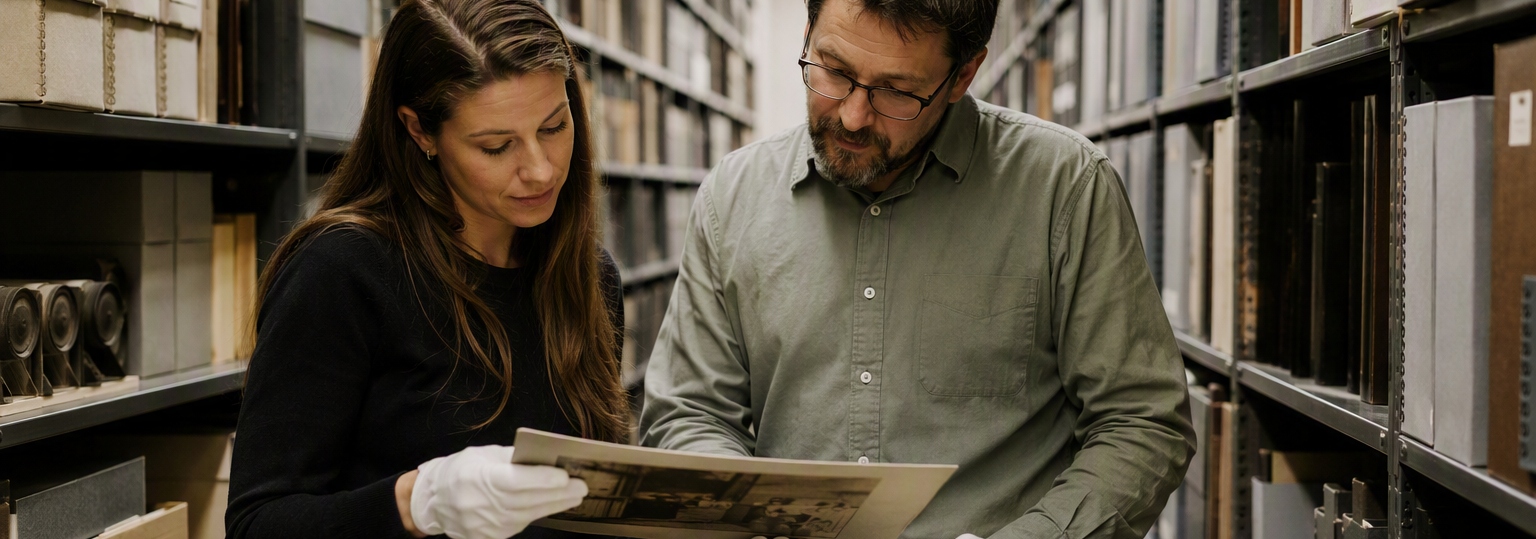
Archivists focus on records. Their work may cover paper collections, photographs, recordings, government files, business records, and digital material. They decide what should be kept, describe collections, protect fragile items, answer research requests, and manage access. That puts greater emphasis on organization, preservation, and consistent description, especially for work involving large or mixed collections. Historian roles place more weight on sustained research, source analysis, and written findings.
The Bureau of Labor Statistics reports that archivists, curators, and museum workers had a median annual wage of $60,330 in May 2025. Employment for that group is projected to grow 4% from 2025 to 2035, with about 4,300 openings each year. For historians, the agency reports median annual pay of $76,750 in May 2025, projected growth of 3% over the same period, and about 300 openings per year. Those figures describe different occupational groups, so they should not be treated as a guaranteed salary for a particular master’s graduate. They do show a meaningful tradeoff: historian roles report higher median pay, while the broader archivist, curator, and museum-worker group has more projected annual openings.
That distinction should shape the courses and assignments you prioritize. A program centered on public history may be more useful if you want to produce interpretation for visitors or communities, while archival interests call for close attention to records, collections, preservation, and access. Research-focused study may make more sense if your target work depends primarily on source analysis and formal written findings.
| Career Direction | Main Work | Program Features to Seek | Common Work Product |
|---|---|---|---|
| Public history | Interpret history for public audiences | Public history, cultural heritage, exhibits, preservation, and field experience | Exhibits, tours, public programs, reports, or site plans |
| Archives | Preserve, describe, and provide access to records | Archival studies, records management, digital records, preservation, and field experience work | Finding aids, collection descriptions, access rules, or digital collections |
| Historical research | Study primary and secondary sources to answer research questions | Research methods, advanced seminars, and a substantial final research project | Research reports, publications, policy history, or interpretive studies |
Public History Jobs Serve Audiences and Places
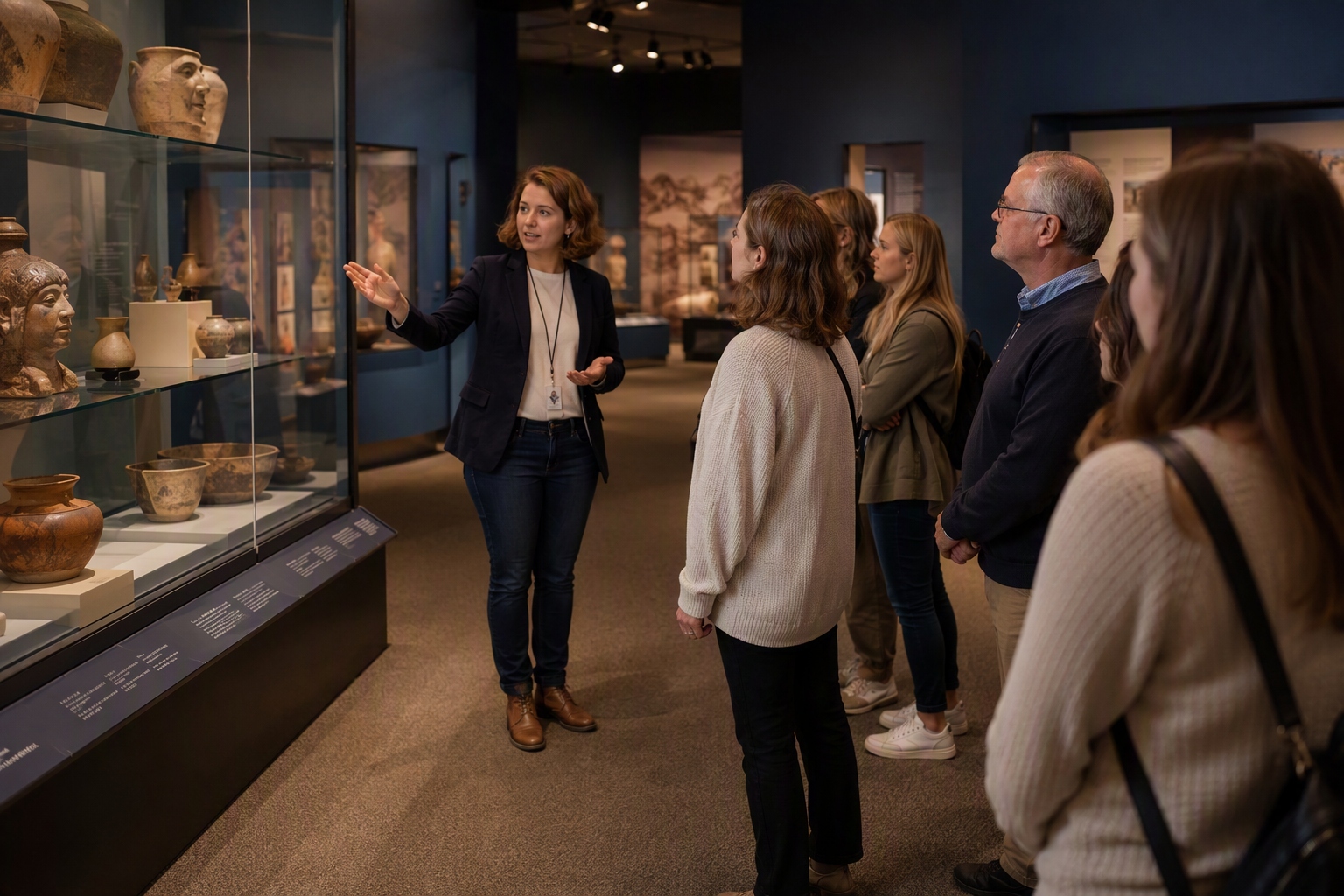
Public history is a strong fit if you want historical research to reach visitors, residents, agencies, or clients through museums, historic sites, government programs, preservation work, or cultural organizations. That range is useful, but it also means the degree title alone will not tell you what your daily work will involve.
Those titles do not describe interchangeable jobs. An exhibit curator may research objects and shape a story, while a museum educator turns that material into programs for visitors. An archivist or records manager may spend more time organizing and describing information, while a preservation role may involve historic buildings, local rules, surveys, and written reports. Johns Hopkins University’s Master of Arts in Cultural Heritage Management offers a program-title example aimed more directly at cultural heritage than a general history degree, which may help you compare how closely a curriculum matches the work you want.
- Choose public history if you want to explain history to visitors, residents, agencies, or clients rather than keep your work primarily within academic research.
- Check for field experience if museum, preservation, or historic-site work is your goal. A program that includes practical work may prepare you differently from one centered mainly on readings and research papers.
- Review student projects to see whether graduates produce exhibits, interpretive plans, digital projects, or research papers. Those examples reveal whether the program’s training leans toward public communication, collections work, preservation, or traditional scholarship.
The Bureau of Labor Statistics found that workers with a history degree had a median wage of $70,000 in 2023, and that 50% held an advanced degree. That broad figure covers many occupations and does not promise a museum salary. It does show that graduate education is common among history degree holders, although the value of a particular program depends on whether its coursework and projects support the type of public-facing or preservation work you intend to pursue. Readers considering work beyond museums can also review jobs for liberal arts majors for a wider view of research and communication roles.
Archival Work Rewards Records Skills
Archive jobs call for a different type of preparation. Historical knowledge helps you understand context, but employers also need people who can appraise records, arrange collections, write descriptions, preserve material, manage access, and handle digital files. Those subjects represent the work behind an archive’s public-facing services, so the degree title alone tells you very little about whether a program builds usable archival skills.
A general history master’s may build strong research skills without covering those records functions. American Public University System’s Master of Arts in History is an example of a broad history title. That background can still support archival work, but you may have to build the records-specific portion of your preparation through electives, field work, or a final project. Before selecting that type of degree for archive work, inspect the course list for archival methods, digital records, preservation, and supervised practice. You can also compare the history route with online library science master's options, which may provide more direct archival coursework. The tradeoff is straightforward: the broader program may leave more room for historical research, while the archival option may spend more of the curriculum on skills a records employer can evaluate directly.
- Look for courses in archival description and access.
- Confirm that digital records receive more than a passing mention.
- Ask what kind of local archive, library, or records office can host required field work, and whether the placement is arranged, supervised, and available near you.
- Find out whether the final project produces work you can show an employer, such as a finding aid, collection description, or digital records project.
GetEducated's Picks
- Grand Canyon University Master of Arts in History / Education
- Johns Hopkins University Master of Arts in Cultural Heritage Management
- Campbellsville University Master of Arts in Teaching High School Education (8-12) / Social Studies
Cost still matters because a narrow career goal does not justify ignoring the total bill. Its history master’s report lists American Public University System’s Master of Arts in History at $13,300 (In-State/Out-of-State) or $11,800 (Military). Compare the full cost with the archive-specific courses and field experience you would receive. A lower price is less useful if the curriculum leaves you responsible for finding archival practice elsewhere; a higher price deserves scrutiny if its extra coursework does not produce skills or work samples relevant to the jobs you plan to pursue.
Match the History Degree Title to Public History or Archive Work
A degree title is a useful first filter, but it cannot tell you whether the coursework matches the job you want. A Master of Arts in History usually points toward historical study and research. A public history or cultural heritage title suggests work for public audiences, where interpretation, preservation, and exhibits may matter. An archival studies degree points more directly toward records, preservation, and access. The Bureau of Labor Statistics says historians typically need a master’s degree, but that standard does not make every history program equal preparation for museum, site, or archive work. The title identifies the program’s general direction; the course list shows what you will actually practice.
Program examples show why the distinction matters. Johns Hopkins University’s Master of Arts in Cultural Heritage Management speaks directly to cultural schools, while Grand Canyon University’s Master of Arts in History / Education combines history with an education focus. Those descriptions may help you sort programs quickly, but neither title should substitute for reviewing the curriculum. A program connected to education may be more useful for public-facing instruction than for records work, while a program with a heritage emphasis may offer a clearer path toward museums or historic sites. The word history alone does not tell you which skills receive the most attention.
- For museum and site work: favor public history, cultural heritage, exhibits, interpretation, preservation, and field experience. These subjects point toward work that translates historical material for visitors and communities, rather than concentrating only on academic research.
- For archives: favor appraisal, description, access, preservation, records management, digital records, and a field experience. This coursework addresses the practical decisions behind organizing records, protecting them, and helping people find and use them.
- For historian roles: favor advanced research methods, deep subject study, and a substantial research project. That combination gives you more evidence of sustained historical analysis than a broad survey of topics alone.
Compare course lists rather than relying on program summaries. Look for the subjects that occupy required courses, not just electives or items mentioned in a marketing description. The broader online liberal arts master's directory can help you see nearby degree types, but your final comparison should stay tied to the work you want to perform after graduation. If two programs carry similar titles, the required curriculum and field experience may be more useful decision points than the title itself.
Find Your Online Art & Liberal Arts Degree
Narrow 71 accredited online Art & Liberal Arts degree programs to find the perfect fit.












University of Missouri-Columbia
Master of Education in Learning, Teaching & Curriculum / Social Studies Education
Frequently Asked Questions
What jobs can I get with an online master’s in history?
Possible directions include public historian, museum educator, exhibit curator, archivist, records manager, preservation specialist, cultural resource manager, consultant, and historian. Your course subjects and field experience will shape which roles are realistic, because these titles involve different daily work. A program built around interpretation and exhibits will point you in a different direction from one centered on records, description, and preservation.
Is a history master’s enough to become an archivist?
It may be, but only if the program gives you relevant records training or you gain that experience elsewhere. Check for archival description, preservation, digital records, access, and supervised work. Those details tell you whether the degree prepares you for the work archives actually require or leaves you to build that preparation after graduation.
What is the difference between a public historian and an archivist?
A public historian interprets history for an audience through exhibits, sites, programs, reports, or media. An archivist manages records and collections so they remain preserved, described, and available to users. The distinction matters when you compare programs: public history emphasizes interpretation and audiences, while archival work depends more heavily on organized records, preservation, and access.
Is an archival studies degree better than a history master’s for archive work?
An archival studies degree offers the more direct course match. A history master’s can still work if it includes archival methods, digital records, preservation, and practical experience. Review the actual course list rather than relying on the degree title, since two programs with similar names can prepare you for noticeably different work.
Can I work in a museum with an online history master’s?
An online degree can supply the academic preparation, but museum employers may also look for direct experience with collections, exhibits, education, or visitors. A local internship can help fill that gap. This is especially relevant if your online coursework is largely reading and research based; experience gives you evidence that you can apply that knowledge in a museum setting.
Should I choose a thesis or an internship for public history?
An internship usually aligns more closely with museum, archive, preservation, and cultural organization work. A thesis may fit better when you want research-heavy historian roles or later doctoral study. The choice affects what you can show after graduation: an internship demonstrates workplace experience, while a thesis demonstrates sustained independent research.
Does the degree title matter to archive employers?
It can help signal your preparation, but the transcript and experience matter more. A broad history title needs clear evidence of archive courses and records work. Without those details, employers may have difficulty seeing how the degree connects to archival responsibilities, even if the program includes substantial historical study.
Do online students need local field experience?
Some programs require it, and it can strengthen your case even when optional. Ask whether the school helps approve a museum, archive, library, historic site, or records office near you. That approval process can affect whether you can complete the requirement locally, particularly when an online program serves students who are not near campus.
How do I compare public history and archive programs?
Compare required courses, field work, final projects, faculty specialties, and the work students produce. Then match those details to the tasks in the comparison table above. A program with a polished title but no relevant field work may be a weaker choice than one whose coursework and final project clearly demonstrate the skills you want to use.