

Key Takeaways:
- Understand the different types of education degrees, from certificates to doctorates, so you can choose the path that best matches your career goals and schedule.
- Flexible online and hybrid formats make it possible for working adults to pursue education degrees while balancing work and family, but it’s crucial to verify program requirements and accreditation before enrolling.
- Maximize your investment by transferring prior credits and leveraging life experience. Focus on programs with transparent outcomes and strong support for adult learners.
Most college students over age 25 are juggling work and family while pursuing education goals. The right degree isn’t about prestige or labels. It’s about finding a program that fits your schedule and gets you to your career target within budget.
Different degree levels serve different purposes for working adults. Whether you need a quick certificate or a full bachelor's degree, understanding the types of education degrees helps you make informed decisions about time and format. GetEducated helps you compare over 35,000 accredited programs to find the right match for your situation.
Education Degree Types Explained: From Certificates to Doctorates
Understanding different education degree types can help you match your career goals with the right time investment and academic commitment. Each degree level serves different purposes, from quick skill-building certificates to comprehensive doctoral programs that prepare education leaders.
GetEducated's Picks
- Grand Canyon University Bachelor of Science in Educational Studies
- Liberty University Master of Arts in Educational Studies
- Campbellsville University Associate of Science in Education
| Degree Level | Typical Duration | Admission Requirements | Online Availability | Example Careers | Notes for Adult Learners |
|---|---|---|---|---|---|
| Certificate/Post-Baccalaureate Certificate | 6-12 months | High school diploma or bachelor's degree | Widely available | Teaching assistant, substitute teacher, corporate trainer | Fastest entry point; can often stack toward degree programs |
| Associate Degree (AA/AS/AAS) | 2 years full-time, 3-4 years part-time | High school diploma or equivalent | Very common | Preschool teacher, instructional aide, community education coordinator | Strong transfer potential; up to 60 credits toward bachelor's; licensing varies by state |
| Bachelor's Degree (BA/BS/BEd) | 3-4 years with transfer credits, 5-6 years part-time | High school diploma, some require minimum GPA | Extensive options | Elementary/secondary teacher, curriculum specialist, education administrator | Required for teaching licenses; many accept 60+ transfer credits from associate degrees |
| Master's Degree (MA/MS/MEd/MBA) | 18-24 months part-time | Bachelor's degree, often 3.0+ GPA | Very common | Principal, instructional coordinator, higher education administrator | Often required for administrative roles; many evening and weekend options available |
| Doctorate (PhD/EdD) | 4-6 years part-time | Master's degree, research experience | Limited but growing | Superintendent, university professor, education researcher | Highly specialized; cohort models help working professionals stay on track |
According to the National Center for Education Statistics, these degree classifications follow federal standards that ensure consistency across accredited institutions. When exploring online degree options, confirm programs are properly accredited and review their accreditation standards along with transfer credit policies to minimize your time to completion.
Online, Hybrid, or On-Campus: Best Formats for Working Adults
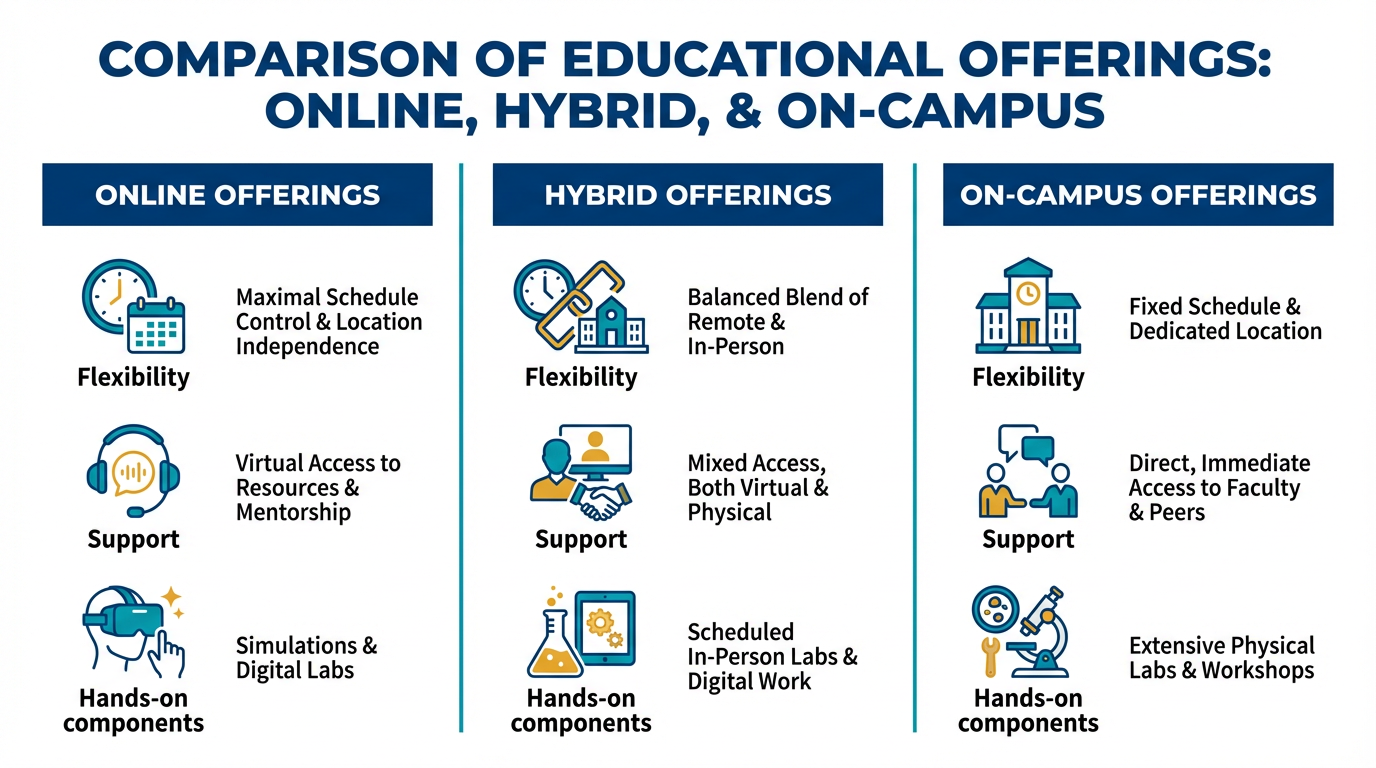
When you're balancing work and family responsibilities like many adult learners, the format of your degree program can determine your success. Online education degrees for working adults come in several formats, each with different scheduling demands and support structures. Understanding these differences helps you choose a program that works with your life rather than against it.
Here's how each format serves different needs and schedules:
- Choose asynchronous online programs for maximum scheduling flexibility. These programs let you complete coursework entirely on your own timeline without required login times. You can study after your children sleep or during lunch breaks, making them perfect for unpredictable work schedules. Research shows that asynchronous learning also provides more time to reflect on material and participate thoughtfully in discussions.
- Consider synchronous formats when you need live interaction and structure. These programs require attendance at virtual classes during specific times, offering real-time support from instructors and classmates. While less flexible, they provide accountability that many adult learners find helpful and reduce the sense of isolation that can come with independent study.
- Explore hybrid programs for careers requiring practical experience. Many healthcare and education degrees combine online coursework with in-person components like clinicals, student teaching, or laboratory work. This format minimizes your time on campus while still meeting professional licensing requirements.
- Verify all program requirements and technical needs before enrolling. Ask about proctored exam policies, required software, internet speed requirements, and mandatory orientations or residencies. Some programs need specific browsers, webcam monitoring, or testing accommodations that could affect your study setup. Clarifying these details upfront helps you avoid unexpected challenges.
- Understand exactly what "online" means for your specific program. Distance education definitions vary between institutions, and some programs labeled as online still require periodic in-person attendance for labs, final projects, or comprehensive exams. Make sure you know all attendance expectations before you enroll.
How to Choose the Right Degree as a Career Changer
Switching careers at 38 while juggling work and family means every education decision counts. Knowing how to choose an education degree starts with understanding what employers actually want, not what sounds appealing in program brochures. Smart degree selection means working backward from your goal job to find the most direct, affordable path that fits your schedule.
Start With Job Requirements, Not Program Marketing
Before browsing degree programs, research actual job postings in your target field and location. Note the required degree level and professional licensure. Also, look at practical experience requirements like clinical hours or student teaching. For education careers specifically, check our teacher certification guide alongside state requirements through NASDTEC, as these vary significantly by state. Healthcare roles often require specific accreditation or clinical partnerships. Working backward from your goal job ensures your chosen program actually qualifies you for available positions.
Maximize Transfer Credits and Prior Learning Assessment
Reduce your time to graduation by transferring existing college credits and earning credit for life experience. Many accredited programs accept up to 75% of degree requirements through transfer credits. You can also earn credits through CLEP exams or portfolio assessments of work experience. Call the admissions office to discuss your background before applying. Programs with generous transfer policies can cut years off your degree completion and thousands from your total cost.
Verify Program Outcomes and Accreditation
Choose programs with transparent success data rather than flashy marketing. Use tools like College Navigator to compare graduation rates and average debt loads. Review employment outcomes separately from each program’s career services page. Regional accreditation is non-negotiable, and field-specific accreditation adds credibility. Compare programs side-by-side to identify those with strong track records of graduate success and flexible scheduling options for working parents.
FAQs: Types of Education Degrees for Adult Learners
Working adults considering education degrees often wonder about time commitments and career payoffs. These frequently asked questions about education degrees address the practical concerns that matter most when you’re balancing work, family, and educational goals.
What are the main types of education degrees, and how long do they take?
Education degrees range from certificates (6 months to 2 years) to associate degrees (2 years), bachelor's degrees (4 years full-time, 6-8 years part-time), master's degrees (1-2 years), and doctoral degrees (3-7 years). According to the National Center for Education Statistics, these timeframes represent typical full-time enrollment, with part-time options extending completion periods.
Which education degrees can be completed fully online while working full-time?
Most academic coursework for education degrees can be completed online, including certificates, associate's, bachelor's, and master's programs. However, teacher preparation programs typically require in-person student teaching or clinical experiences. Alternative certification programs often provide more flexible practicum arrangements for working professionals. This flexibility is particularly valuable for working parents who need to study around family schedules.
How do different degree levels impact salary and career advancement?
Higher education levels generally correlate with increased earnings and job security. The Bureau of Labor Statistics shows that workers with bachelor's degrees earn significantly more than those with associate degrees. Master's degrees often unlock leadership and specialized roles, while teaching positions typically require at least a bachelor's degree, with many states requiring master's degrees for permanent certification.
What's the difference between a Bachelor of Arts and a Bachelor of Science in Education?
A Bachelor of Arts (BA) in Education typically emphasizes liberal arts, humanities, and broader educational theory, while a Bachelor of Science (BS) focuses more on scientific methods, data analysis, and specialized subject areas like math or science education. Both degrees qualify you for teaching certification, but the BS may be preferred for STEM teaching positions.
What's the difference between education degrees and teacher certification programs?
Traditional education degrees include both subject knowledge and teaching methods, while alternative certification programs focus primarily on pedagogy for career changers who already have subject expertise. Teacher preparation requirements vary by state, so reach out to schools directly to research your local licensing requirements before choosing a program path.
Next Steps: Compare Accredited Online Degrees With Confidence
Finding the right degree means matching your career goals with programs that fit your schedule and budget. Look for programs that accept prior learning credits and offer flexible scheduling to save both time and money. Adult learners can also reduce costs through scholarships for online students from Education For Less (EDU4Less), a nonprofit offering tuition discounts of 10 to 20% at accredited partner schools.
Once you’ve identified your priorities, verify accreditation status, and explore transfer options. Then map out a realistic weekly study plan before you enroll. When you compare accredited online degrees, focus on programs with transparent outcomes and support services for adult learners. Start your search today with GetEducated to compare over 35,000 accredited programs by cost and format, so you can find options that align with your career timeline and budget.