
Key Takeaways:
- The smartest way to enter this field is to compare the job before the degree, because environmental roles vary widely in required education and daily schedule demands.
- Faster-entry options like field and environmental technician roles can let adults gain experience sooner, while paths like wildlife biology and consulting usually require broader credentials or a longer runway.
- For adult learners balancing work and family, office-based tracks such as policy, compliance, water quality, and some GIS roles often offer the strongest mix of predictable hours and long-term mobility, with practical online degree options to match.
The environmental science field employs hundreds of thousands of workers across roles that look nothing alike, from outdoor fieldwork to office-based compliance review. What makes this field especially tricky for adult learners is how wide the credential gap is: a field technician job may open with an associate degree, while a wildlife biologist post may require a master’s and years of field hours. Comparing environmental science careers before you pick a degree is the smarter move, since targeting the wrong role can mean tuition spent on a credential the job you actually want doesn’t need.
GetEducated offers free, independent research to help you compare accredited online environmental science degree programs by cost and career fit before you enroll.
How to Compare Environmental Science Careers Before You Pick a Degree
One of the most common mistakes adult learners make is picking a degree program first and figuring out the career later. In environmental science, that sequence can cost you real time and money. Environmental scientist education requirements range from a two-year associate degree for some technician roles all the way to a master’s or doctorate for research and senior science positions. The smarter move is to anchor your program search to a specific role, then work backward to the credential that gets you there.
GetEducated's Picks
- East Mississippi Community College Associate of Arts (AA) - Wildlife and Fisheries Sciences Emphasis
- Johns Hopkins University Master of Science in Environmental Sciences & Policy
- University of West Alabama Bachelor of Arts / Bachelor of Science in Environmental Science
Before you browse a single program, run each career option through four practical filters:
- Required degree level: Some environmental roles are accessible with a bachelor’s degree; others expect graduate coursework. Knowing the floor before you enroll keeps you from over-investing or under-preparing.
- Typical work setting: Field-heavy roles such as site sampling or wildlife monitoring differ markedly from office-based compliance or policy work. If your schedule is unpredictable, a role tied to set lab or office hours may be a better match than one requiring regular travel to remote sites.
- Entry-level access: Certain paths let you start working in the field while you finish your degree, which matters a lot if you need income now and a credential later. Others require you to complete the full program before the door opens.
- Accreditation: Any online program worth your tuition should come from a regionally accredited school. Accreditation is the standard that tells you a program has been reviewed for quality, and it matters to employers who will eventually see that degree on your resume. It also affects whether your credits transfer and whether you qualify for federal financial aid.
If cost is the deciding factor, these cheapest online environmental science degree rankings can help you compare accredited programs by price before you apply. The careers covered ahead are organized with these filters in mind, starting with the roles that offer the most accessible entry points and moving toward those that demand more specialized preparation.
1. Environmental Field Technician: Offers One of the Fastest Entry Points
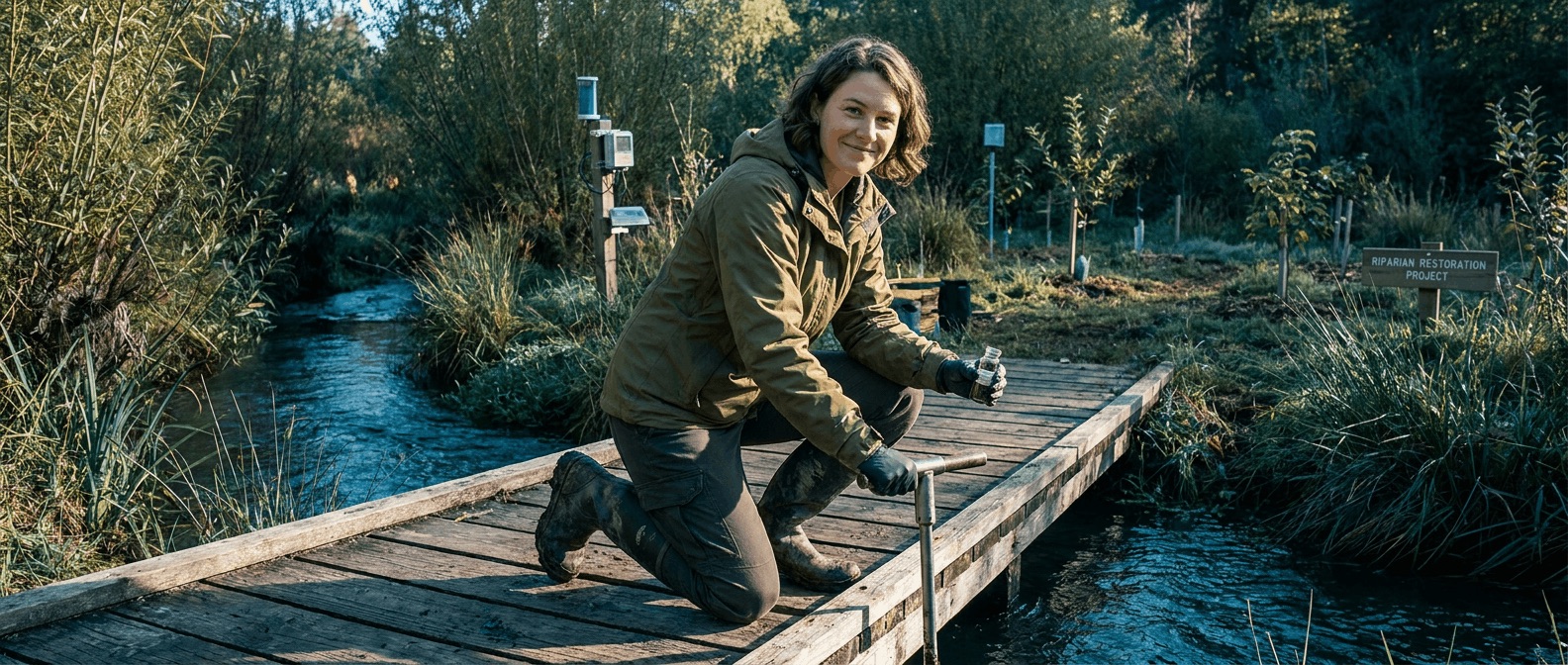
Among entry-level environmental science jobs, field technician work stands out because it doesn’t demand years of advanced study before you can get started. The day-to-day work centers on collecting soil and water samples and conducting site inspections, with data recorded for compliance reports along the way. That hands-on focus means employers often hire candidates with an associate degree in environmental science or a bachelor’s in progress, which makes this one of the more accessible starting points in the field.
For adult learners, especially, this path carries a practical advantage beyond the shorter ramp-up time. Working as a field technician lets you test whether environmental science is genuinely the right fit before committing to a longer degree program. It rewards people who are comfortable outdoors and want work experience that builds toward supervisory or specialist roles over time.
2. Environmental Technician: Turns Applied Skills Into Early Career Momentum
Environmental technician roles are often a better fit for adult learners than people realize, because the work is concrete and well-defined, without asking you to become a research scientist first. The day-to-day work typically centers on monitoring pollution levels, supporting compliance inspections, running lab tests, and collecting site data, which means your coursework has a direct, visible connection to what you’ll actually do on the job.
That’s a real advantage if you’re returning to school after years away. A closer look at typical duties and pay is available in this environmental technician career profile. An associate degree or a bachelor’s program with solid science coursework can get you qualified, and many of these programs are available fully online. You’re not looking at years of graduate-level study before you can apply for a position.
Here’s what makes this path worth a closer look:
- The scope of the role is clear. Technicians support scientific and compliance work rather than leading it, so expectations are well-defined and easier to match against your coursework.
- You can enter with less time in school. An associate degree can open entry-level doors, while a bachelor’s degree completion program in environmental science tends to support advancement and broader employer options down the line.
- Coursework transfers directly to the job. Lab procedures, data recording, environmental regulations, and field sampling methods are things you study and then actually use, which makes the investment feel practical.
- The role can serve as a testing ground. Spending time as a technician lets you experience environmental work firsthand before deciding whether to pursue a more specialized path like conservation science or policy.
- Demand is steady across multiple sectors. Technicians work for government agencies, private consulting firms, manufacturing companies, and utilities, so the job market isn’t limited to one type of employer.
For adult learners who want a clear line between education and employment, environmental technician roles offer one of the more grounded entry points in the field.
3. Water Quality Specialist: Can Pair Public Impact With Steady Demand
Water quality specialist jobs sit at a clear intersection of environmental science and public health. The work involves testing water sources and tracking compliance with environmental regulations, all in service of protecting local water supplies for communities and ecosystems. That concrete mission appeals to adult learners who want their career to feel purposeful, not abstract. Many of these roles exist within utilities and state or municipal environmental agencies, which tend to offer more predictable schedules than consulting or fieldwork-heavy positions.
A bachelor’s degree in environmental science is usually the safer long-term investment for this path. It satisfies the baseline requirement for most agency and utility postings, and it also opens doors to analysis or supervisory roles down the line. Adults who start with an associate degree may qualify for entry-level support work, but a full bachelor’s degree gives you more room to grow without returning to school a second time.
4. GIS and Remote Sensing Specialist: Rewards Technical Learners Who Prefer Screen-Based Work
GIS and remote sensing in environmental science shift much of the work from field sites to digital analysis. Instead of collecting soil samples or conducting outdoor inspections, specialists use mapping software and satellite data to track land use and monitor how ecosystems change over time. For adult learners who need a more predictable schedule, a role centered on spatial analysis and digital tools can be far easier to plan around than one tied to outdoor conditions or variable field assignments.
Here is where the “get the broadest degree you can” instinct works against you. Employers hiring for GIS and remote sensing roles routinely prioritize demonstrated platform fluency over a general science credential. A bachelor’s degree paired with a graduate certificate in GIS or an Esri technical certification in ArcGIS often carries more hiring weight than a broader environmental studies diploma, which costs twice as much. For adult learners watching both tuition and time, that distinction is worth building your program search around.
5. Environmental Consultant: Builds Flexibility but Often Demands Broader Credentials
Environmental consulting is one of the more varied paths in the field, and variety is exactly why adult learners should examine it carefully before committing. Consultants move between compliance assessments, site investigations, environmental impact reports, and direct client work.
The U.S. Bureau of Labor Statistics projects 4 percent employment growth for environmental scientists and specialists through 2034, about as fast as the average for all occupations, a category that includes many consulting roles. What that projection doesn’t show is the structural reality underneath it: shifting project deadlines and travel to client sites that make workloads genuinely hard to predict week to week. For someone finishing a degree while managing a job and family, unpredictability isn’t a minor footnote. It’s a deciding factor.
Here’s what to keep in mind before committing to this path:
- Expect a bachelor’s degree as the floor, not the ceiling. Most consulting firms want candidates with a broad science or environmental studies background, and many mid-level roles favor candidates with a master’s degree in environmental science or specialized certifications on top of that.
- Client-facing skills matter as much as lab or field skills. Consultants write reports and present findings, then translate regulatory requirements for clients who are not scientists, so strong communication matters alongside technical knowledge.
- Project-based work means income and schedules can vary. This is less of a concern in agency roles or technician positions, where hours and responsibilities tend to be more defined.
- The long-term payoff is real, but it takes time to build. Consultants who develop niche expertise, whether in remediation or regulatory compliance, often earn well and advance steadily. Getting there usually requires several years of varied experience first.
If you want variety and room to grow across multiple environmental sectors while working closely with clients, consulting can be a strong long-term direction. Just go in knowing it rewards adaptability and broad credentials, making it a harder short-term fit for adult learners who need stability while they finish a degree.
6. Conservation Scientist: Fits Adults Drawn to Land Management and Resource Protection
Conservation science careers are more hands-on and applied than many people expect. The work centers on soil health, forest management, land use planning, and natural resource protection, often in partnership with government agencies or nonprofits. If you’re drawn to mission-driven work and can picture yourself in agency settings rather than corporate offices, this path offers a clear sense of purpose. Roles closely related to conservation, like park ranger positions, show how applied this work really is day to day.
A bachelor’s degree in forestry or a related natural resources program is the practical starting point here because the job blends science coursework with planning and field-based assessment. That combination means your education directly maps to what you’ll actually do on the job. It’s worth noting that conservation roles at federal and state agencies tend to offer more predictable schedules than consulting or project-based work, which can matter a great deal when you’re finishing a degree while managing family and work.
7. Wildlife Biologist: Is Rewarding but Usually Takes Longer to Reach
The wildlife biologist career path stands apart from most other environmental roles because it asks for more. Employers typically want specialized coursework in ecology or wildlife management, along with hands-on field experience that is hard to replicate online. For adult learners balancing work and family, that combination of narrow focus and field time can make this path less practical than technician or compliance roles, at least in the near term.
That said, this career is a genuine fit for learners who feel strongly about a specific species group or ecosystem and are willing to plan for a longer runway. A bachelor’s degree is often the starting point, but many positions in research or federal agencies prefer or require a master’s degree in biology. If wildlife biology is your goal, go in with clear eyes about the timeline and target roles that reward your specific academic focus.
8. Policy and Compliance Roles: Can Offer the Best Fit for Adult Learners Seeking Office-Based Growth
If the earlier roles on this list feel hard to picture alongside a full-time job and family responsibilities, environmental policy and compliance careers are worth a close look. The work centers on regulations, reporting, audits, and organizational standards rather than field sampling or lab analysis. That shift in setting matters for adults who need more predictable hours and a workspace that isn’t dependent on weather or site access.
What makes this corner of environmental science particularly practical is that it rewards skills many adult learners already have. Strong written communication and attention to detail are exactly what compliance and policy work demands, along with the ability to track complex systems. Here is what stands out about these paths:
- Move between sectors with the same core skills. Compliance knowledge built in manufacturing or utilities translates to government agencies and consulting firms alike, giving you more flexibility as your career grows.
- Overlap with sustainable energy and climate work. Climate planning and clean energy projects rely heavily on regulatory knowledge and environmental impact reporting, so a compliance background can open doors to future-facing roles without requiring a science lab career. A certificate program in sustainability can help you build that bridge without committing to a full new degree.
- Start building credentials without a graduate degree. Many entry-level compliance and environmental health and safety roles accept a bachelor’s degree in environmental science or a related field, such as public administration, making the education path more manageable than research or wildlife positions.
- Favor documentation and systems thinking. Adults who have managed processes or teams in previous careers often find that this work feels more intuitive than pure science roles because the job is about applying environmental rules, not discovering new ones.
- Offer more schedule stability. Office-based environmental jobs tend to follow standard business hours, which matters when you are building an education plan around shift work or childcare.
For adult learners who want environmental work that connects to real-world impact without requiring years of field experience or a research-focused graduate program, policy and compliance roles are often where the credential requirements and daily work line up most realistically with a demanding schedule.
FAQ About Environmental Science Careers for Adult Learners
Choosing an environmental science path raises real, practical questions, especially when you are balancing work and tuition costs. The answers below address what adult learners most often need to know before committing to a program or a career direction.
What degree do most federal and state environmental jobs expect from new hires?
Most federal and state environmental jobs list a bachelor’s degree as the minimum requirement for entry-level positions. Some technician-level roles accept an associate degree combined with relevant experience. If your goal is a government agency position, a four-year science degree gives you the broadest eligibility across the most job postings.
Can you start in environmental science with an associate degree, or is a bachelor’s degree the safer option?
An associate degree can open doors to field technician and lab support roles. A bachelor’s degree, though, gives you access to a wider range of positions and clearer advancement options. If you can complete a four-year program online at a manageable cost, it tends to offer better long-term value than stopping at two years.
Which environmental science careers are most realistic for adults who need predictable schedules?
Compliance and policy roles, along with water quality positions tied to agencies or utilities, tend to offer the most consistent hours. These positions are less dependent on seasonal fieldwork or project-based deadlines. For adults who need stability around family or a current job, office-based environmental roles generally provide more scheduling predictability than consulting or wildlife work.
Do online environmental science degrees work for careers that include field or lab responsibilities?
Yes, with some planning. Many online programs build lab requirements into hybrid formats or accept prior work experience as a substitute. If a role you want requires field hours, look for programs that let you complete those locally. Checking each program’s lab policy before enrolling saves you from surprises later.
How can you tell whether an online environmental science program is accredited and worth the cost?
Start by confirming the school holds regional or national accreditation from a body recognized by the U.S. Department of Education. Then check whether the program’s curriculum aligns with the specific job titles you are targeting. Cost per credit hour matters too. A cheaper, accredited online degree can serve your career just as well as a more expensive one.
Choose the Environmental Science Career That Fits Your Life, Then Compare Accredited Online Degrees
The most impressive-sounding role is rarely the best starting point. The smarter question is which path has a degree requirement and work setting that actually fits around your job and your family, with an advancement timeline you can live with. That match matters more than prestige.
Run each role back through the filters this guide covers, and weigh them against the realities of your current job and family life. When those line up with a specific accredited program, you have a plan, not just a hope. GetEducated’s independent research tools let you compare environmental science program rankings by cost and career outcome, so your next enrollment decision in environmental science careers is grounded in evidence, not guesswork.