

Key Takeaways:
- Accredited online degree students are eligible for many of the same scholarships and financial aid opportunities as traditional campus students. This includes federal aid as well as institutional and private awards.
- Adult learners can boost their chances by targeting scholarships tailored to their backgrounds, such as awards for working parents or career changers. Employer tuition assistance and community-based grants provide additional funding layers.
- A successful scholarship search requires verifying program accreditation and setting up a consistent weekly application routine. Using trusted resources also helps you avoid scams.
Yes, scholarships for online degrees absolutely exist. Accredited online degree programs qualify for many of the same scholarships and grants as traditional campus programs. The difference lies in knowing where to look and how to present your unique story as an adult learner. Many working parents and career changers miss out on funding because they think online scholarships don’t exist or require different qualifications. Returning students often share this misconception.
Nonprofit organizations like Education For Less are specifically built to help working adults save on their degrees, offering 10 to 20% tuition discounts at partner online schools along with covered application fees and free transcript ordering. Beyond that, adult learners can access institutional awards and employer tuition assistance by targeting accredited programs. Private scholarships and community-based grants add further options when you match eligibility requirements precisely. This guide breaks down scholarship types available for online programs and explains how adult students qualify. It also reveals where to find legitimate opportunities, answers common financial aid questions, and provides a simple weekly search routine that fits even the busiest schedule. GetEducated helps you compare more than 35,000 quality online degrees to find programs that align with your scholarship search strategy.
Types of Scholarships for Accredited Online Degrees
As a working parent exploring healthcare programs, you have access to scholarship categories that many traditional students never discover. Most scholarship opportunities available to campus students also welcome online learners. Understanding which awards accept distance education students and which impose study format restrictions helps you target your applications effectively.
GetEducated's Picks
- Alvernia University Bachelor of Arts in Addictions & Mental Health Treatment
- Fisher College Associate of Arts in Early Childhood Education
- Rochester Christian University Bachelor of Business Administration / Marketing
Institutional Scholarships: Generally Equal Access with Important Exceptions
Most colleges offer the same merit and need-based scholarships to students in online programs and on-campus students when programs are accredited. Some schools still restrict certain awards to campus-only students. Research shows that institutional policies can disadvantage distance learners despite equal financial need. Contact program advisors directly to confirm eligibility before investing time in applications, especially for competitive merit awards.
Private and Community-Based Awards: Your Background Opens Doors
Private scholarships focus on who you are rather than how you study. Many target single parents or career changers, while others focus on students entering specific fields like healthcare. The Jeannette Rankin National Scholar Grant awards up to $2,500 annually to women and nonbinary students aged 35 and older who demonstrate financial need. Nursing associations also offer field-specific awards ranging from $1,000 to $10,000. These awards welcome students regardless of study format, making them perfect matches for online healthcare programs.
Employer and Workforce Development Programs: Underutilized Funding Sources
Working adults frequently overlook employer tuition assistance. According to a 2020 survey by the Society for Human Resource Management, 47% of U.S. organizations offer some form of educational benefit to employees, yet only about 2% of eligible workers actually participate. Federal resources confirm these programs can stack with other aid when company policies allow. Healthcare employers often provide higher reimbursement rates for relevant degrees. Workforce development boards also offer last-dollar grants for in-demand fields, with healthcare consistently qualifying for priority funding across most states.
How Adult Learners Qualify for Online College Scholarships
Many adult learners assume they are at a disadvantage when competing for scholarships, especially for online programs. Success comes from targeting the right opportunities and presenting your adult experiences as strengths.
Here’s how to position yourself for online college scholarships:
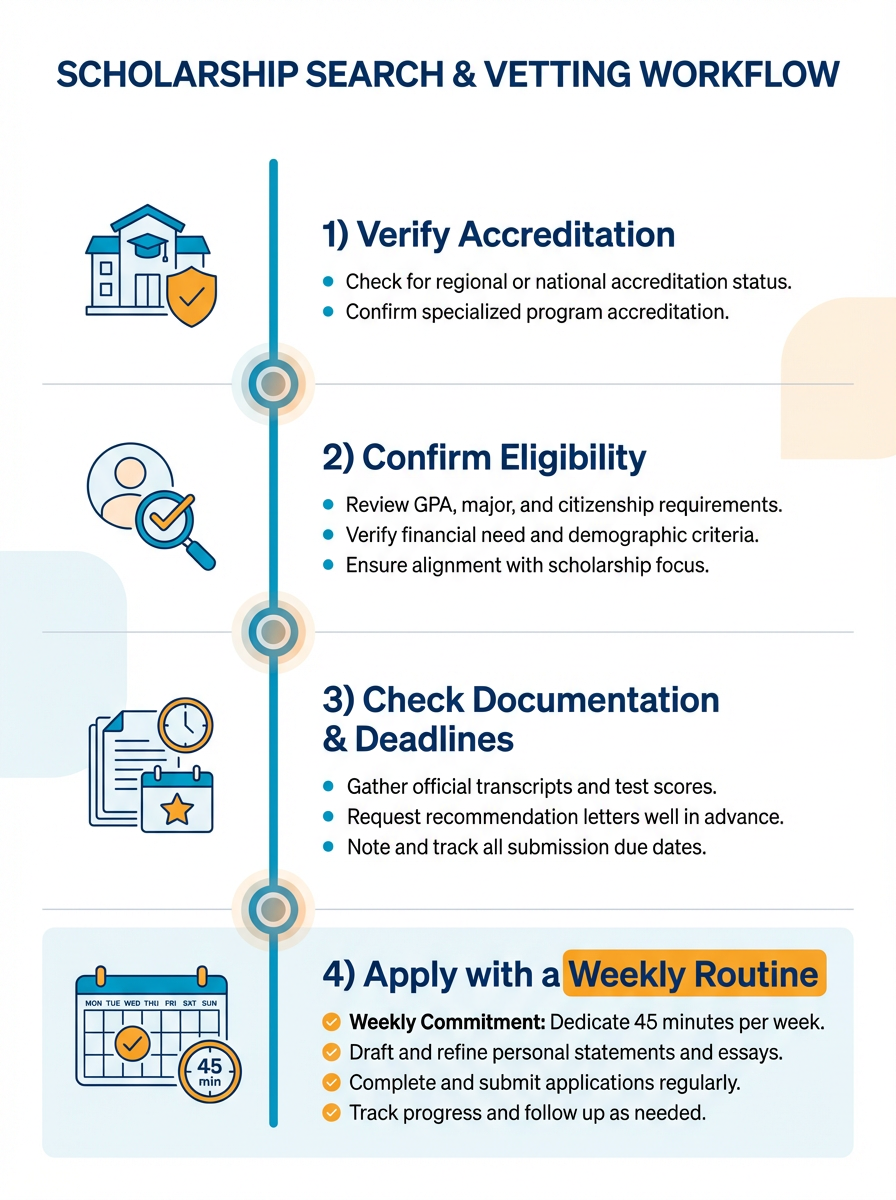
- Verify school accreditation through the federal database before applying to any program-specific scholarships.
- Target awards that are designed for parents or career changers. If you are pursuing a healthcare degree, look for field-specific scholarships as well.
- Highlight caregiving responsibilities and work persistence in personal statements, weaving in any community involvement that shows leadership.
- Apply to employer tuition assistance programs many adult students overlook.
- Schedule weekly 45-minute blocks to research three new opportunities and submit one application.
Remember that federal aid has no age limits, and many private scholarships specifically welcome older students. Your work history and life responsibilities become compelling qualifications when presented strategically.
Where to Find Legitimate Scholarships for Accredited Online Programs
Start your search with trusted sources that prioritize accredited programs and adult learners. Organizations like Education For Less help working adults access tuition discounts of 10 to 20% at partner schools, with no application fees. Check your chosen school’s financial aid page first, then explore professional associations in your field, like healthcare organizations that offer targeted scholarships. Check your employer’s HR portal for tuition assistance programs that combine with other awards (meaning you can use multiple funding sources together). The federal CareerOneStop database catalogs thousands of legitimate opportunities you can filter by field and location.
Before applying, use this simple verification process: confirm the school holds proper accreditation through the Department of Education’s accreditation database, check that scholarships accept online students, and review all deadlines and required documents. Legitimate scholarships never charge application fees or guarantee wins. Red flags include vague sponsors or requests for Social Security numbers upfront. If a promise sounds too good to be true, it probably is. Legitimate scholarship searches require your time and effort, not your money.
Financial Aid for Online Students: Your Top Questions Answered
Adult learners who choose online education have more scholarship and grant options than most people realize. A clear understanding of the rules puts you in a strong position to maximize your funding and make the most of every opportunity.
Do online students have access to the same federal aid as traditional students?
Yes, students in accredited online programs receive the same federal aid as campus students. You must attend an institution that participates in federal aid programs and meet standard enrollment requirements. The Federal Student Aid website confirms this policy applies equally to distance education.
Can I combine scholarships with Pell Grants and employer tuition assistance?
Most scholarships can be stacked with federal grants and employer benefits, but review award letters carefully for stacking restrictions. Some private scholarships reduce their award amounts when you receive other aid. Your school’s financial aid office tracks total awards to ensure you don’t exceed cost-of-attendance limits.
Are part-time online students eligible for scholarships?
Many scholarships require full-time enrollment, but options exist for part-time students. Employer tuition assistance programs often support part-time study, and professional associations frequently offer awards regardless of enrollment status. Check our online college rankings to find programs with part-time-friendly scholarship options.
What application mistakes disqualify adult learners most frequently?
Missing transcripts from previous colleges and incomplete FAFSA forms cause the most rejections. Generic personal statements that fail to reflect your specific goals are another common reason applications get denied. Adult learners also forget to update their dependency status or report their current income accurately. Request transcripts early, personalize each application, and review our accredited online schools directory to verify program credentials before applying.
How does studying online across state lines affect my aid eligibility?
Your federal aid eligibility remains unchanged regardless of your school’s location, provided the institution is accredited and participates in federal programs. State grants may have residency requirements that could limit funding for out-of-state online programs. Schools participating in SARA agreements offer additional consumer protections and may simplify authorization requirements.
Build Your Scholarship Plan and Compare Accredited Online Degrees
Success with scholarships for online degrees starts with a simple routine. Set aside 45 minutes each week to research new opportunities and track your active applications. Keep your materials current by refreshing recommendation letters every three months. Maintain a list of 10 to 15 scholarships that match your profile and timeline.
Once you have your search system in place, spend time comparing accredited online degree programs to find your best-fit school. The right program opens doors to institutional scholarships and employer partnerships, along with field-specific funding that broader searches often overlook. Start with accreditation verification, then evaluate costs and formats to build your target list.
Ready to explore your options? GetEducated helps you compare more than 35,000 accredited online degree programs to find the perfect match for your schedule, budget, and career goals.