

Key Takeaways:
- You can become a marine biologist as an adult learner by strategically stacking credentials, transferring prior credits, and choosing flexible, accredited online or hybrid programs that fit your life.
- Online and hybrid marine biology degrees are increasingly accessible, but require careful planning for hands-on experiences and fieldwork, which can often be scheduled around work and family commitments.
- Affordable pathways exist: maximize transfer credits and target public universities with scholarships designed for nontraditional students to accelerate your transition into marine science.
Ocean careers are not reserved just for recent college graduates. Many adults make successful transitions into marine science later in life. Whether you’re juggling work and family responsibilities, you can build a realistic path into marine science through strategic online learning and local experience-building. The key lies in stacking credentials (earning certificates and degrees that build on each other) while maintaining your current income.
The good news is that marine biology careers offer diverse paths, from research positions at government agencies to conservation work with nonprofits. This guide maps a realistic route for working adults who want to transition into marine sciences without pausing their lives. You’ll discover degree pathways and flexible program options, plus practical ways to gain hands-on experience in your local area. GetEducated lets you compare more than 35,000 accredited online programs to find one that fits your schedule and budget.
Your Adult-Learner Pathway Into Marine Biology
Creating a successful adult learner pathway in marine biology requires a strategic approach that respects your current commitments while building toward your career goals. Rather than starting over completely, you can leverage existing credits, work experience, and flexible learning options to enter this field efficiently. The key lies in planning a realistic progression that fits your schedule and budget.
GetEducated's Picks
- American Public University System Bachelor of Science in Natural Sciences / Biology
- Arizona State University Bachelor of Arts in Biochemistry
- American Public University System Bachelor of Science in Environmental Science
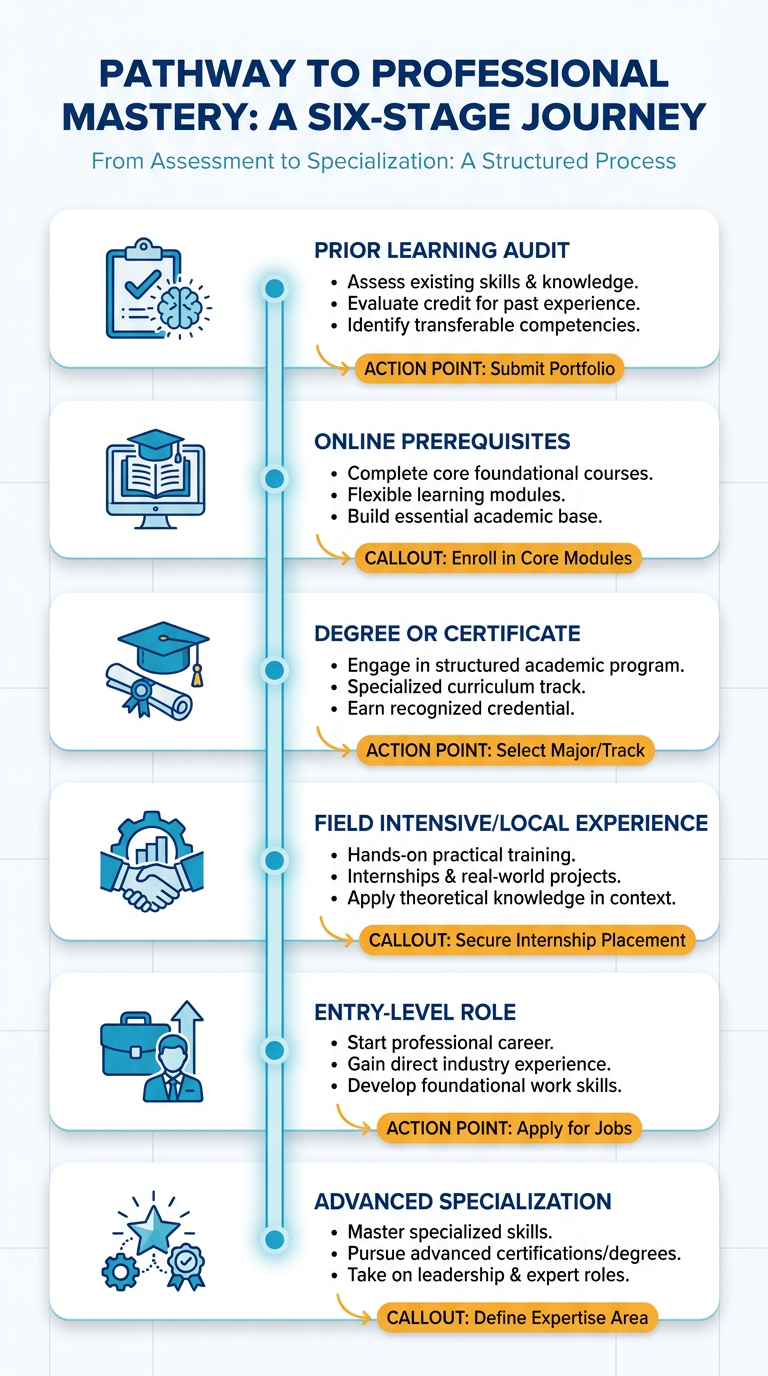
Start Where You Are: Audit Your Foundation
Begin by evaluating what you already have through a comprehensive credit audit. Many adult learners discover they can convert work experience into college credit, potentially shortening your degree timeline and lowering expenses. Request transcripts from all institutions you’ve attended, and research how your professional experience might translate into academic credit through programs like CLEP or portfolio assessment. Plan for approximately 12 hours of weekly study time to maintain steady progress while working. This manageable schedule prevents burnout while ensuring steady academic progress.
Build Your Credentials in Stages
Once you’ve assessed your foundation, the next step is to create a structured learning plan. Marine biology requires strong preparation in biology, chemistry, mathematics, and physics. You can begin building these prerequisites through online biology degree programs that offer the flexibility working adults need. Once you complete these fundamentals, progress to a focused certificate or bachelor’s degree completion program. Add hands-on experience through weekend field intensives, local aquarium volunteer work, or research opportunities at nearby universities. Breaking your education into stages lets you develop skills step by step while maintaining your income.
Prioritize Accreditation and Transfer Potential
Every course and credential you pursue should count toward your long-term goals. Use GetEducated’s degree search to verify accreditation and confirm transfer policies before enrolling. Choose programs from institutions with clear articulation agreements. Look for schools with generous transfer credit policies. This strategy protects your investment and keeps options open if you later decide to pursue graduate study in marine sciences. Remember that credits from legitimate institutions transfer more reliably and carry greater weight with employers and graduate programs.
What Degree Do You Need To Become a Marine Biologist as an Adult Learner?
Most marine biology careers require at least a bachelor’s degree in biology, marine science, or a related field. Adult learners can choose from several credential levels depending on their career goals, time constraints, and financial situation. Compare common credentials, typical outcomes, online feasibility, and transfer potential so you can choose the path that works best for you.
| Credential | Typical Outcomes | Online Feasibility | Transfer Potential |
|---|---|---|---|
| Associate in Science (AS) or Post-bacc Certificate | Foundation in biology, chemistry, math; qualifies for internships, entry lab roles, or progression to bachelor’s | High for coursework; labs may use virtual kits; occasional in-person labs | Strong if from accredited institutions with clear articulation |
| Bachelor’s (BS) in Marine Biology or Related Field | Field and lab technician, conservation assistant, aquaculture tech, outreach educator | High for theory; plan for on-site labs or short field intensives | High; credits can support graduate applications |
| Master’s (MS) in Marine Science | Research scientist roles, program coordination, policy analysis, advanced technical positions | Mixed; many programs offer hybrid formats with scheduled residencies | N/A; terminal or gateway to PhD |
| Specialized Certificates (GIS, R Programming, Diving) | Skills that boost employability and complement degrees | High; many short, online modules available | Stackable with existing degrees |
Many science majors can be completed through accredited online programs, though marine biology specifically often requires hands-on components. STEM fields like biology and environmental science provide solid preparation for marine careers when combined with marine-focused electives or internships. Adult learners can also leverage transferable skills from previous careers, such as customer service experience for outreach roles, when exploring programs through GetEducated’s online degree comparison platform.
Can You Become a Marine Biologist With an Online Degree? Plus Affordable Options and Scholarships
Picture yourself studying marine ecosystems from your kitchen table after your kids go to bed, then spending a few weeks at a coastal research station during summer break. Yes, you can pursue marine biology through online programs, but you’ll need to plan for some hands-on components that no virtual lab can replace.
Here’s what you need to know about making online marine biology education work for your situation:
Online and Hybrid Realities
Most accredited programs blend online coursework with scheduled in-person labs or fieldwork to meet professional standards. This hybrid approach lets you complete theory and foundational science from home while ensuring you gain practical skills.
Programs like Oregon State University’s Marine Studies bachelor’s demonstrate how reputable institutions deliver marine-focused degrees online while requiring specific coastal field experiences you can plan around your schedule.
Virtual labs can supplement, not replace, hands-on skills such as sampling, microscopy, and instrumentation. Even top programs like the University of Washington require intensive field programs lasting several weeks to a full quarter at marine stations.
Ask programs to map exactly which components require travel, how often, and what the added costs are. Oregon State University’s marine biology program requires a 10-week residency at their coastal campus, which you can plan and budget for in advance.
Affordability Moves
Maximize transfer credits by sending all prior transcripts for evaluation before enrolling. Many online biology and environmental science programs accept substantial transfer credit from community colleges and previous coursework.
Target public universities with in-state or reduced online tuition and transparent fee structures. State schools often offer 20-40% lower tuition rates compared to private institutions for the same accredited online degree quality.
Use employer tuition benefits if available, and maintain steady progress to avoid course repeats that increase total costs. Consistent momentum keeps your investment predictable.
Scholarships and Aid
Search for scholarships targeting adult learners and career changers, including awards from professional societies in marine science, oceanography, and environmental fields. Organizations specifically supporting nontraditional students can significantly offset tuition costs.
Layer federal aid, state grants, and professional society awards, such as those from marine or oceanographic associations. Many organizations specifically support career changers entering environmental fields.
Apply early and re-apply annually. New awards often open every cycle, and many scholarship committees value the life experience and determination that adult learners bring to marine science.
How Can Career Changers Transition Into Marine Biology Later in Life? Frequently Asked Questions
Career changers often worry about practical hurdles like gaining experience without quitting their current job or finding affordable programs that fit their schedule. These questions address the most common concerns about making a realistic transition into marine biology as a working adult.
What entry-level jobs can I get while finishing my marine biology degree?
Lab assistant, aquaculture technician, and environmental outreach coordinator roles often hire candidates with some college coursework. Many aquariums, research facilities, and conservation organizations offer part-time positions that build relevant experience. Review typical jobs for biology majors to understand salary ranges and entry-level requirements.
Can I gain marine biology experience if I live far from the ocean?
Absolutely. Freshwater research labs, watershed conservation groups, and inland aquariums provide transferable skills in water quality testing and aquatic species management. University labs often welcome volunteers for data entry or sample preparation. Many science programs also connect students with virtual research projects.
What skills from my current career transfer to marine biology?
Retail experience builds communication skills needed for education and outreach positions, while a customer service background helps with public program coordination. Data analysis and technical writing translate well to research roles. Any laboratory or outdoor work experience gives you an advantage in pursuing marine biology careers.
How do I find affordable, accredited online marine biology programs?
Start by checking accreditation status at the Department of Education’s database (ope.ed.gov), then compare tuition costs and transfer credit policies. Public universities typically offer lower online rates than private institutions. Use GetEducated’s degree comparison platform to review programs that accept maximum transfer credits and reduce your time to graduation.
How long does it take to complete a career change into marine biology?
The timeline depends on your starting point and target role. A bachelor’s completion typically takes 2-3 years studying part-time if you have prior college credits. Adding relevant work experience through internships or entry-level positions can happen simultaneously. Most career changers achieve entry-level positions in the field within 3-5 years of starting their education plan.
Next Steps: Compare Accredited Online Programs and Build Your Plan
Becoming a marine biologist as an adult learner requires a realistic, staged approach that fits your work and family life. You can build the necessary credentials through flexible online programs that combine coursework with targeted field experiences, making this career change achievable without sacrificing your current income.
Your path forward has three stages: completing or refreshing science prerequisites, then enrolling in a recognized degree or certificate program with specific hands-on requirements, and finally gaining local experience through volunteer work or internships. Verify any program’s legitimacy through the federal accreditation database to protect your investment and ensure employer recognition.
To get started, explore affordable online science degrees ranked for cost and quality for aspiring marine biologists. GetEducated lets you search and compare over 35,000 accredited programs from 1,700+ schools, filtering by cost, delivery format, and field of study to build your personalized education plan.