
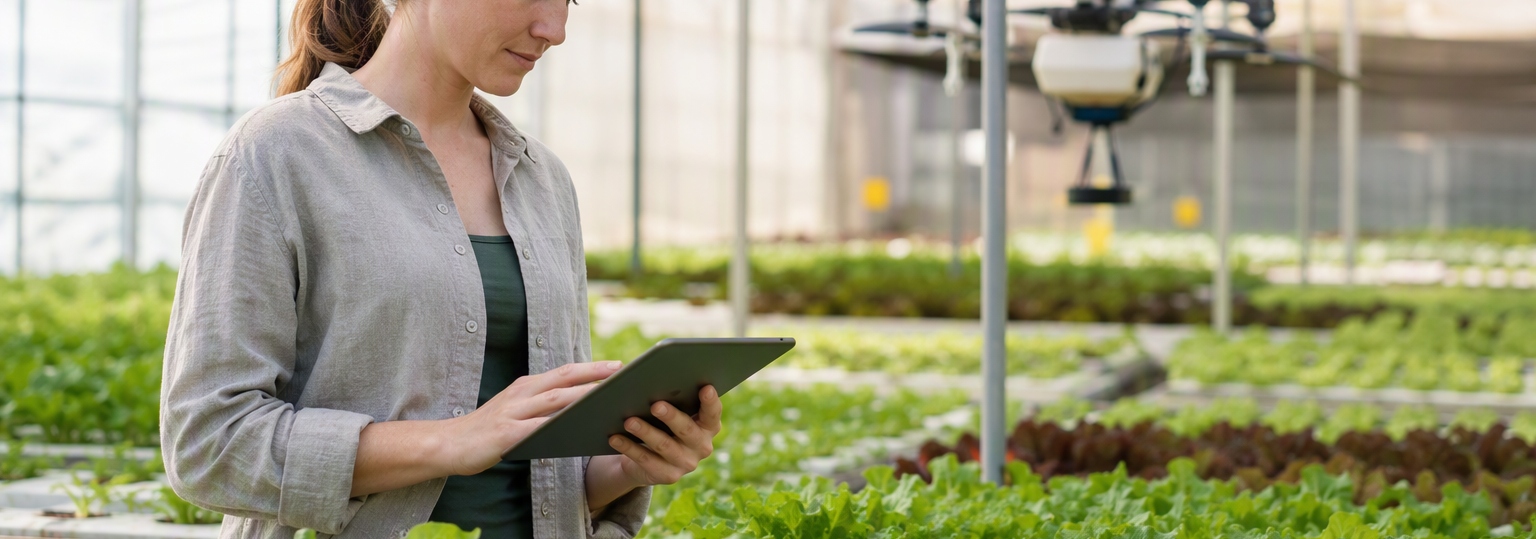
If you’re paying for an online agriculture degree while working, the useful payoff isn’t a glossy label. You need skills that help you read farm data, judge soil and crop conditions, understand the business, and make defensible sustainability decisions. That’s what online agriculture bachelor’s degree skills should look like on a transcript and in a hiring manager’s hands.
Key Takeaways
- Agtech study should pair data tools with crop, soil, pest, or livestock knowledge. A dashboard is only useful if you understand what the numbers say about a real field or operation.
- Sustainability courses should teach students to weigh environmental effects against production and business needs. Good intentions don’t replace workable decisions.
- A program’s required courses matter more than a broad agriculture label. The course list is where the sales copy stops talking.
Curricula differ sharply. One degree may focus on finance and supply chains, while another centers on plant health, food systems, or precision agriculture. If you’re fitting school around shifts, harvest seasons, or a family schedule, a required lab or field component can matter as much as the subject itself.
The bill still matters.
Working adults should compare required courses, electives, and practical work before applying, then ask how students complete any hands-on requirement and how much of the schedule is fixed. A program that sounds broad but leaves you with little agriculture beyond general business coursework isn’t a bargain just because the title says agriculture.
Practical work counts. This guide explains the course patterns and specializations that build useful skills. It also shows how to spot programs that cover agriculture only at a surface level, before you spend tuition on credits that don’t move you toward the job you want.
Skills an Online Agriculture Bachelor’s Degree Must Build
If you want to work with crops, livestock, or food systems, software alone won’t carry you very far. You need the natural sciences behind production: biology, chemistry, soil science, plant science, animal science, ecology, or pest management, depending on the program. These courses help you explain why a crop, herd, or food system behaves as it does. Without that base, software output is just a set of numbers.
That foundation matters during an ordinary workweek, not just in a lab. A dashboard might flag a problem in a field, but you still need to understand whether soil conditions, pests, plant disease, or weather patterns explain the result. Ask whether the program includes hands-on assignments, lab work, or field-based analysis. An online format can teach the concepts, but a screen won’t automatically provide practical experience.
The online horticulture bachelor’s degree at Colorado State University‘s combines entomology, plant pathology, and weed science. Its Soil and Crop Sciences concentration covers soil science, cropping systems, and integrated pest management. That combination shows what a connected curriculum looks like: students study the organism, the production system, and methods used to control threats.
Business study is the second core. Penn State’s online Bachelor of Science in Agribusiness Management requires 120 credits and covers management, finance, production, marketing, sales, and supply chain topics. Southwest Minnesota State University offers a Bachelor of Science in Agribusiness Management, while University of West Alabama offers a Bachelor of Business Administration in Agri-Business. These titles point toward business-heavy study rather than laboratory science.
That difference affects your job options. A science-heavy plan fits work involving crops, animals, soil, or field problems; a business-heavy plan fits budgets, purchasing, sales, and operations. Neither label tells you enough by itself, so compare required courses before you trust the program description.
- Science skills: assess soil, plants, pests, animals, and production conditions.
- Business skills: read budgets, compare inputs, plan sales, and understand supply chains.
- Communication skills: explain technical findings to producers, customers, agencies, and managers.
Communication is the skill employers notice when the technical work reaches another person. You might understand a pest report perfectly, but the job still requires explaining its cost and recommended response to a producer, customer, agency, or manager who doesn’t use scientific vocabulary every day.
Start with the required course list on the school’s site, then compare it with other online agriculture degree options. A concentration name can be useful, but required courses show what you will actually study. Also check whether courses run on a fixed schedule, because a weekly lab or group project can collide with farm work, rotating shifts, or a child-care handoff. The course list tells you what the degree teaches; the delivery details tell you whether you can finish it.
Agtech Courses Should Connect Data With Field Decisions

You’re not paying for a software tour. You’re paying for the ability to make a better field decision. Agricultural technology is not one skill; it may involve geographic information systems, remote sensing, farm records, mapping, sensors, data analysis, or equipment systems. A course earns its place when it shows how those tools answer an agricultural question. A mapping assignment that only labels parcels is thin. One that connects location data with soil, water, pests, or crop performance gives you something closer to work an employer can understand.
At Arkansas State University, you can pursue a Bachelor of Science in Agriculture with a specialization in Geographic Information Systems & Precision Agriculture. Its title makes the technology focus clear. Compare that with the university’s broader Bachelor of Science in Agriculture in Agricultural Studies, which may fit a student seeking wider subject coverage. The tradeoff is room: a general degree can spread coursework across more subjects, leaving less space for advanced mapping or data courses, while the specialization signals a narrower path before you ever submit a resume.
That difference matters after work.
If you’re studying around shifts or a farm schedule, a practical assignment still has to be doable. Look for work that requires interpretation, not a paragraph describing a tool: mapping a field, comparing production records, evaluating an input, or presenting a recommendation. Ask whether you can use records, maps, or observations from near home instead of traveling to a campus site for every task. Science courses may also include remote or local lab work, so ask how the school handles experiments and materials; a vague answer here can become a scheduling problem fast. GetEducated’s guide to online science courses with labs explains common formats.
- Which software or data systems appear in required courses?
- Do assignments use agricultural records, maps, or field observations?
- Can working students complete practical tasks near home?
- Will graduates leave with projects they can discuss with an employer?
Technology alone does not guarantee strong job prospects. The Bureau of Labor Statistics reports that agricultural and food scientists earned a May 2024 median salary of $78,770, with 6% projected job growth from 2024–2034. Those figures do not turn a thin curriculum into a smart purchase; students interested in this work should favor programs with firm science, research, and data requirements, then confirm those subjects appear in required courses rather than optional electives.
Sustainability Study Has Several Distinct Tracks
You need to know what problem the program actually studies. Sustainability can mean crop management, soil health, water use, food distribution, resource economics, or community food systems. Those aren’t interchangeable subjects. A useful program defines its problem and teaches you to judge tradeoffs: how a practice affects production, cost, land, water, labor, and the long-term use of resources.
Arizona State University offers a Bachelor of Science in Sustainable Food Systems. Colorado State University’s online choices include Horticulture, Environmental and Natural Resource Economics, and Soil and Crop Sciences–Sustainable Agricultural Management. The label matters less than the coursework behind it. Food systems study follows products and policy beyond the farm, while soil and crop study stays closer to production; resource economics adds market and policy analysis.
- Production track: soils, crops, pests, water, and farm practices.
- Food systems track: distribution, access, policy, and organizations.
- Economics track: resource use, markets, regulation, and decision analysis.
- Horticulture track: plant production, landscape systems, and managed environments.
These tracks lead you toward different questions. A production student might spend a workweek thinking about soil, water, and crop decisions. A food systems student is looking farther down the chain, at distribution, access, policy, and organizations. An economics student is studying the cost and rules behind those decisions. That difference follows you into your transcript and your job search.
Do not assume that a program using the word sustainable teaches technical crop science. Check how many science courses are required and how many electives you may choose. Ask whether an elective-heavy plan lets you build the focus you need or simply leaves you to assemble it yourself, because a broad menu is not the same as a coherent course of study.
The Bureau of Labor Statistics reports that agriculture degree holders had a 2023 median wage of $60,000, and 44% worked in occupations requiring at least a bachelor’s degree. That broad result makes specialization and course selection especially important. Your intended work should guide the choice. A producer seeking better soil and crop decisions needs different training from a food program coordinator or resource analyst.
Pick the coursework before the brochure language. For a broader view of related fields, review science, engineering, and math degree fields.
Compare Course Maps Before You Compare School Names
GetEducated's Picks
- University of West Alabama Bachelor of Business Administration / Agri-Business
- Southwest Minnesota State University Bachelor of Science in Agribusiness Management
- Arkansas State University Bachelor of Science in Agriculture / Agricultural Studies
A degree title won’t tell you what you’ll actually study. NC State’s online Bachelor of Science in Agricultural Science requires 120 credit hours. The University of Tennessee’s online Bachelor of Science in Agricultural Business also requires 120 credit hours and lists an estimated completion time of 48 months. Same total. Different preparation. Read the required course list before you give either school your money.
Look for the courses that match the work you want after graduation. One plan may lean toward production and science; another may put more weight on management, technology, or markets. The difference matters if you’re working a farm job by day and hoping to move into agtech, sustainability, or an office-based agriculture role after finishing. Electives won’t rescue a required curriculum that misses your target.
| Program Example | Verified Structure | Curriculum Question |
|---|---|---|
| Arkansas State University | 120 credit hours; accepts up to 90 transfer credits | Which agriculture courses remain after transfer review? |
| NC State | 120 credit hours | How much room is available for a technical emphasis? |
| University of Tennessee | Agricultural business curriculum with a stated four-year plan | Does the course map favor finance, production, or marketing? |
Transfer credit can shorten the route, but it may not replace upper-level agriculture requirements. Arkansas State University accepts up to 90 transfer credits for its online agriculture bachelor’s degree. That sounds generous until you learn which credits still remain. Ask for a written transfer evaluation that identifies the science, business, technology, and capstone courses you must complete.
Get the answer before you enroll. A working adult with a full schedule could transfer a large block of general education credits and still face a long stretch of specialized courses, labs, or projects. The school should show you exactly where your credits land, not simply quote the maximum it accepts.
Admission rules also affect where you can start. The University of Tennessee lists a minimum 2.0 cumulative GPA and six transferable college credits for one online agriculture program. Applicants with fewer than 24 credits must submit a high school transcript. These rules help degree completers judge whether a program fits their current record, rather than discovering a paperwork problem after they’ve planned around a start date.
Cost still matters, but compare the full bill only after checking curriculum fit. Review the total credits you must complete, mandatory fees, lab materials, software, and any travel or local field requirements. A lower advertised tuition rate is no bargain if the program leaves you paying for extra coursework or driving to required field activities. GetEducated’s online bachelor's science and math comparisons can help you examine more options.
Find Your Online Math & Science Degree
Narrow 33 accredited online Math & Science degree programs to find the perfect fit.






Arkansas State University
Bachelor of Science in Agriculture / Geographic Information Systems & Precision Agriculture

University of Northwestern Ohio
Bachelor of Science in Business Administration / Agribusiness Management
The University of Tennessee - Martin
Bachelor of Science in Agricultural Business / Farm & Ranch Management
Frequently Asked Questions
What skills do online agriculture students learn?
A degree title won’t tell you much by itself. Common areas include agricultural science, data analysis, business, communication, production planning, and resource management. The exact mix depends on the major and concentration. If you need soil science but get mostly management courses, the name on the diploma won’t fix that gap.
Can an online agriculture degree teach hands-on skills?
Online doesn’t always mean laptop-only. It can support them through home lab kits, local observations, field projects, internships, or work-based assignments. Confirm the format before enrolling, especially if travel would be difficult. A required field visit is a real scheduling problem if you work shifts or care for children.
What should an agtech curriculum include?
Look for data collection, mapping, analysis, agricultural systems, and decision making. The strongest course maps connect technical tools with real crop, soil, livestock, or business questions. Ask to see the syllabus for the technical courses, not just a list of course titles; “data” can mean serious analysis or a thin survey of software.
Is agribusiness the same as agricultural science?
No. Agribusiness usually gives more space to finance, marketing, management, and supply chains. Agricultural science generally places more weight on biology, soils, plants, animals, or production systems. Pick the lane that matches the work you want, because switching from business coursework to science-heavy preparation later can be expensive and slow.
Which agriculture specialization is best for sustainability?
That depends on the problem you want to address. Soil and crop programs fit production work, food systems programs examine distribution and policy, and resource economics programs focus on markets and resource decisions. Read the required-course list before trusting the label: two programs can sound similar while preparing you for very different jobs.
Do agriculture programs require laboratory courses?
Some do, especially programs with biology, chemistry, soil, or plant science requirements. Ask whether labs are virtual, completed with mailed materials, or arranged at an approved local site. “Online” may still mean handling materials at your kitchen table or driving to a partner location, so get the logistics in writing before paying tuition.
Should I study precision agriculture or general agriculture?
Precision agriculture may fit students who want mapping, sensor, and data skills. General agriculture offers broader exposure and may leave more room to combine science, business, and production electives. The tradeoff is focus: a narrower program gives you a clearer technical story, while a broader one gives you more room to change direction.
Does agricultural engineering require special accreditation?
Engineering is a distinct route. Programs preparing students for engineering licensure commonly use EAC/ABET accreditation, and the usual path also includes the FE exam, acceptable experience, and the PE exam. State requirements vary. Review ABET-accredited online programs before comparing engineering degrees. If licensure is your goal, accreditation and state approval deserve more attention than a convenient online format.
How can I tell whether a sustainability program is technical enough?
Count required courses in biology, chemistry, soils, crops, statistics, economics, and data systems. Then read course descriptions and capstone requirements instead of relying on the degree title. A capstone built around an actual agricultural problem tells you more about the program’s expectations than polished recruitment language ever will.