

If you’re paying for an MSN while keeping a nursing job, the curriculum has to prepare you for the teaching role you want—not simply add letters after your name. The online MSN nurse educator curriculum should connect education theory, course design, teaching practice, and supervised field work. Compare online nurse educator master's programs on those features before school name.
- Look for coursework in teaching methods, assessment, lesson planning, and nursing education research. These subjects show whether the program teaches you to build and evaluate instruction, rather than limiting the degree to advanced nursing content.
- Check whether the field work includes real classroom, simulation, clinical, or online teaching. A program with practice in your intended format may be more useful than one with a placement that looks substantial but does not match the job you want.
- Match the specialization to your intended setting, such as academic nursing, staff development, or clinical education. The setting affects which teaching skills you’ll use most and whether the required practice fits your current work schedule.
Program designs differ more than their names suggest. One degree may place most of its weight on education courses, while another may require a longer teaching placement or more clinical hours. More field work can strengthen your teaching experience, but it can also create scheduling problems if you’re working shifts or caring for family. The strongest fit depends on the kind of educator role you want and the setting where you expect to practice.
GetEducated’s nursing education ranking can help you compare program cost after you understand the academic tradeoffs. A lower bill does not make up for field work that cannot fit your job, a placement in the wrong teaching environment, or a curriculum that skips the skills you need. Compare the academic structure first, then use cost to separate programs that can genuinely prepare you for the same goal.
What An Online MSN Nurse Educator Curriculum Should Cover
An online MSN nurse educator curriculum should do more than extend your clinical nursing knowledge. It should explain how adults learn, how instructors measure whether learning occurred, and how nursing programs prepare students for safe practice. Look for coursework in teaching methods, learner assessment, curriculum development, test construction, program evaluation, and education research. Those subjects separate an education-focused degree from a general nursing leadership program, even when both include familiar management or clinical content.
The University of North Carolina Wilmington’s Master of Science in Nursing - Nurse Educator prepares students to teach didactic, clinical, and distance nursing courses and requires 36 credit hours, according to the program page. That combination matters because the teaching work can change from one setting to another: a lecture requires different preparation from a clinical group, while an online course depends on a different approach to communication and assessment. A curriculum that addresses all three gives you a clearer picture of the instructional skills the degree is built to develop.
A useful course list should also help you connect educational theory to the work you expect to do. Check for:
- Lesson planning and teaching methods
- Assessment, grading, and test construction
- Curriculum planning and program evaluation
- Simulation, clinical teaching, or distance education
The balance among these subjects matters. A program with strong curriculum planning but little attention to assessment may leave you less prepared to judge whether students are meeting course objectives. A program focused on clinical teaching but silent on distance education may also be a weaker fit if you expect to teach online.
For a broader look at the work itself, compare the curriculum with the duties described in GetEducated's nurse educator career guide. A program that lists only general nursing leadership courses may not give you enough practice in instruction and evaluation. Before applying, map each required course to the kind of teaching you want to do, then identify any area that appears only as a brief topic rather than a dedicated course. That comparison can help you distinguish an MSN that prepares you to lead from one that prepares you to teach.
GetEducated's Picks
- Sacred Heart University Master of Science in Nursing / Nursing Education
- Ohio University Master of Science in Nursing / Nurse Educator
- Campbellsville University Master of Science in Nursing / Nurse Educator
Field Work Design Shows How You Will Learn To Teach
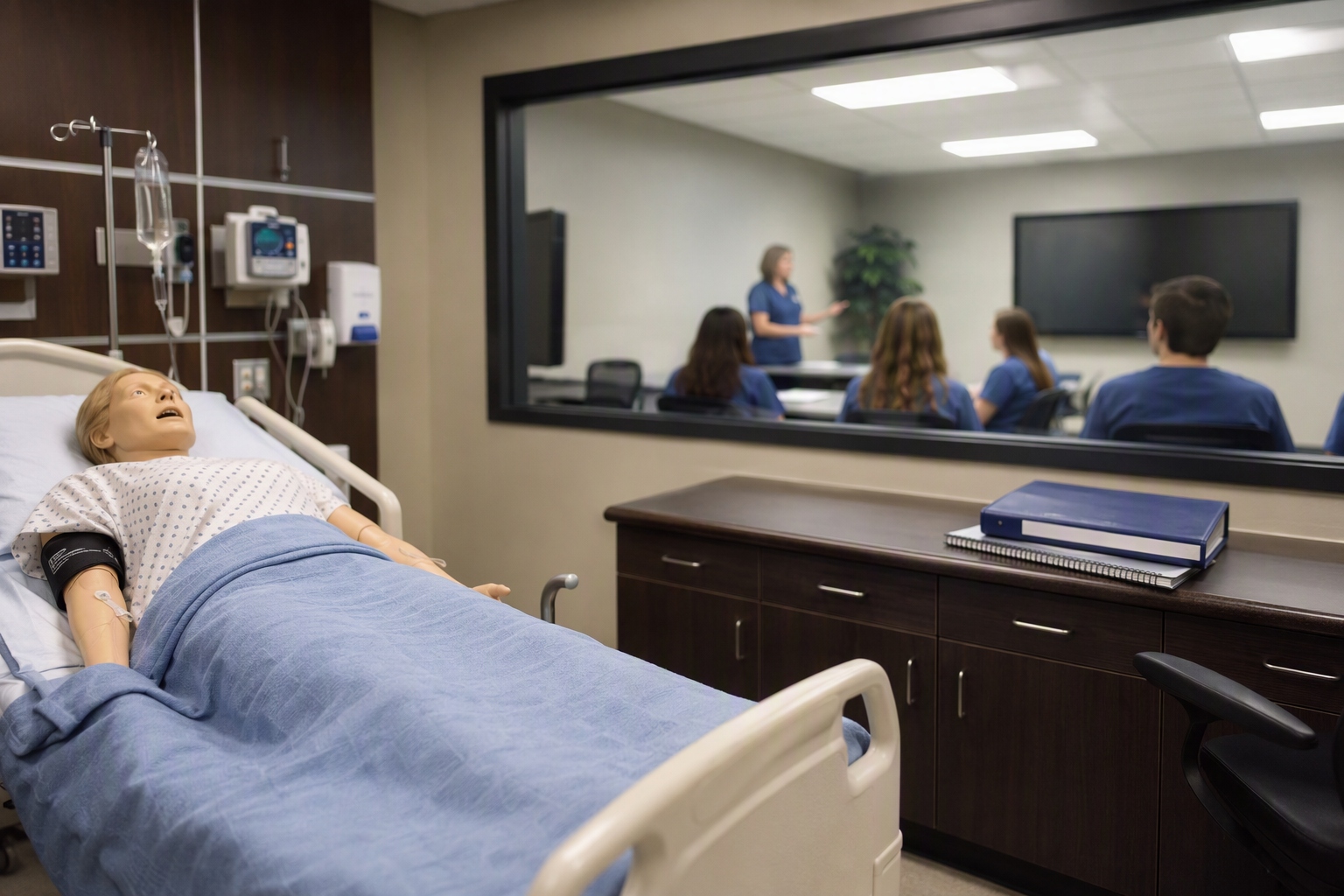
Field work is where the degree’s teaching claims meet real learners. Ask who supplies the placement, whether you find the preceptor, what settings qualify, and whether the hours may be completed at your workplace. A program can be fully online for its classes and still require in-person teaching practice, so the field work plan can affect whether the degree fits your work schedule as much as the online course format does. A school-arranged placement may reduce the coordination you have to handle, while a student-arranged placement may give you more control over location but leave you responsible for finding an approved site.
The University of Texas at Arlington’s Master of Science in Nursing - Nursing Education includes 135 precepted clinical hours, according to the university’s program page. The same page identifies the program as CCNE-accredited. Those details give applicants concrete items to verify: the amount of supervised practice, the program’s nursing accreditation, and how the placement process works in practice. The hour total tells you the size of the commitment, but it doesn’t explain where the work happens, how often you must be on site, or whether the school helps secure the placement. Those logistics can matter more than the label attached to the delivery format.
Field work content can also reveal the type of educator the school is preparing. One placement may focus on classroom teaching, while another may center on simulation, staff education, or bedside instruction. That difference affects the experience you finish with and the settings in which you can practice your teaching skills. Your preferred setting should guide the questions you ask before applying, especially if your current workplace could serve as the site or if travel would create a separate scheduling problem.
- Can the placement include classroom and clinical instruction?
- Does the preceptor have the required graduate nursing preparation?
- Can the school approve a local site near your home or job?
Also confirm whether the school or the student is responsible for contacting sites, submitting paperwork, and meeting approval requirements. A preceptor standard can protect the quality of supervision, but it may also limit which local professionals qualify. Use GetEducated’s online nurse educator master's comparison alongside each school’s field work policy. The comparison is useful only when you read the placement details behind the program label and match those requirements to the setting, supervision, and schedule you can realistically manage.
Compare Curriculum Features In Real Programs
Program titles do not tell you how much time belongs to education courses or supervised teaching. A side-by-side review makes the difference easier to see. Compare the published credit totals, practice hours, and teaching settings rather than assuming that similar titles describe identical training. Those details show whether the program is built mainly around teaching theory, hands-on preparation, or a balance of both.
| Program | Published curriculum detail | What it may mean for your decision |
|---|---|---|
| The University of Texas at Arlington | 34 credit hours and 135 precepted clinical hours | A defined credit and practice plan for applicants who want a measured clinical teaching component |
| University of North Carolina Wilmington | 36 credit hours; prepares students for didactic, clinical, and distance nursing courses | A broader teaching setting mix for applicants interested in more than classroom instruction |
The table is not a quality ranking. It shows why two nurse educator degrees can lead to different student experiences. A lower credit total may reduce the course load, while a broader teaching focus may better match work in online nursing education or clinical staff development. The tradeoff is that fewer credits may also leave less room for electives or additional education-focused work, so the total needs to be read alongside the actual course list.
Practice requirements deserve the same close reading. A program may describe supervised teaching in broad terms, while another identifies the setting, teaching mode, or preceptor expectations more clearly. That difference affects how much coordination the placement may require and whether it fits the kind of teaching you plan to do after graduation. A field experience that matches your target setting is more useful than one that merely satisfies a graduation requirement.
Read the course titles, not only the concentration name. A useful plan should make room for education theory, assessment, curriculum work, and supervised teaching. It should also explain how the field work connects to the courses rather than leaving the placement as an isolated final requirement. Look for a sequence that builds from concepts into practice, so you can tell what preparation comes before the teaching experience and what work you will be expected to complete during it.
For more program examples, browse all online nurse educator degrees. Keep a short comparison list with the credit total, practice setting, teaching modes, and preceptor rules for each program. Add the courses that cover assessment, curriculum, and teaching methods, too; otherwise, a program with a familiar title can appear comparable while offering a very different path through the degree.
Find Your Online Nursing Degree
Narrow 212 accredited online Nursing degree programs to find the perfect fit.


















Specializations And Skills To Match With Your Goal
Specialization names can point to different kinds of teaching work. A nursing education track usually centers on instruction, assessment, curriculum, and clinical supervision. A program with a broader nurse educator focus may let you apply those skills across academic, hospital, simulation, or distance settings. The label alone won’t tell you how much time is devoted to each area, so read the required courses and field work plan to see which meaning applies. That comparison matters if you already know whether you want to teach students, educate practicing nurses, or help run an education program.
The University of Texas at Arlington’s Master of Science in Nursing - Nurse Educator (RN to MSN) is a separate program title from its nursing education degree. That distinction is useful for registered nurses comparing entry routes: the title may describe both the educator focus and the path into the master’s program. Look at the admission requirements and course sequence alongside the title. Two programs can use similar language while asking students to complete different preparation before reaching advanced education coursework.
Texas A&M’s published nursing education information describes broad or specialized nurse educator paths, according to the university. In practice, the choice may affect electives, teaching placements, and the learners you work with after graduation. A broad path may leave more room to shape your studies, while a specialized path may make the intended teaching setting clearer. Select the option that supports your intended audience rather than the one with the most attractive label.
- Academic teaching: prioritize classroom, online, assessment, and curriculum skills. Required coursework should show how you will plan instruction and measure whether learners understand it.
- Clinical education: look for supervised clinical instruction, simulation, and staff development. These skills point more directly toward teaching nurses in practice than toward a primarily classroom-based role.
- Program leadership: check for evaluation, curriculum planning, and education research. This combination matters if your goal includes improving or managing an education program, not only delivering individual lessons.
GetEducated’s MSN nursing education career guide can help you connect those skill groups to possible work settings. The degree should make that connection visible through its required courses and field work plan. If the specialization sounds suitable but the course list does not include the skills you need, treat that mismatch as a real drawback. Compare the required courses first, then use electives to fill smaller gaps; electives shouldn’t have to carry the entire focus of the degree.
Price still belongs in the final review. GetEducated’s The 135 Most Affordable Online Master’s in Nursing Education ranking reports total program costs including mandatory fees from $16,575 to $16,890 among the listed programs. That range shows why a specialization comparison can’t be separated from affordability: a program that fits your goal may still be a poor practical choice if its required practice costs or transfer treatment changes the total. Treat the total as a comparison point, then confirm current charges, transfer rules, and required practice costs with each school.
Frequently Asked Questions
What courses are in a nurse educator MSN?
Common subjects include teaching methods, learner assessment, curriculum development, test construction, program evaluation, education research, and clinical instruction. Course names vary, so review the full plan rather than relying on the program title. The course list shows whether the degree leans toward general education theory, hands-on clinical teaching, or a balance of both.
Does an online nurse educator MSN include field work?
Many programs include supervised teaching practice. Check the required setting, preceptor rules, approval process, and whether the placement can be completed near you. A placement that requires travel or a specific type of facility can affect your schedule and add costs that the online format doesn’t make obvious.
Can nurse educator field work be completed at my workplace?
Some schools may approve a current workplace, but approval depends on the site, preceptor, duties, and separation between your job and student role. Your regular work assignments may not count as student teaching if they don’t meet the program’s supervision or instructional requirements. Ask for a formal review before enrolling.
Will an online program include clinical teaching?
It may. Published plans can include classroom, clinical, simulation, or distance teaching. Confirm which modes are required rather than assuming the word online describes the field work. A program may deliver coursework remotely while still requiring an in-person teaching experience, so the delivery format and field work format need separate answers.
How many credits does a nurse educator MSN require?
Credit totals vary by school and entry route. Compare the required credits with the course list and the supervised practice plan, not the title alone. Two programs with similar names can require different amounts of coursework or field work, which changes both the time commitment and the total cost.
What skills does a nurse educator need?
Key skills include lesson planning, clear instruction, learner assessment, feedback, test writing, clinical supervision, and program evaluation. These skills matter beyond delivering lectures: they shape how you measure learning, respond when students struggle, and connect classroom content with clinical practice. Review assignments and field work for evidence that the program actually develops them.
Can an MSN nurse educator degree prepare me to teach online?
Some programs specifically prepare students to teach distance nursing courses. Look for online teaching methods, digital assessment, and field work that includes distance education. That focus can be useful if you want to teach online, but it may offer less preparation for students who learn primarily in classrooms, simulations, or clinical settings.
Should I choose a broad or specialized nurse educator track?
Choose based on the learners and setting you want to serve. A broad track may support several teaching settings, while a specialized option may give more focused preparation. The tradeoff is flexibility versus depth, so compare the required courses and practice experience with the teaching work you expect to pursue.
How do I compare nurse educator MSN programs?
Compare required education courses, credit total, field work content, preceptor rules, teaching modes, specialization choices, accreditation, and total program cost. Also check whether the school assigns a placement or expects you to locate one, because that policy can determine how practical the program is from your location. Course titles alone won’t show that difference.
Keep comparing before you commit: Compare online nursing programs