

You’re paying for a degree that should help you get hired, so the coursework needs to produce more than credits. The online digital media communications bachelor’s curriculum should connect writing, media analysis, visual production, web skills, and portfolio work to the jobs you want. Compare that course mix before you explore online digital media communications bachelor's programs.
Cost belongs in that comparison, too. Start with the most affordable programs on your list, then compare each school’s total cost, including fees, before you apply. A lower published tuition price does not tell you whether the overall program will fit your budget, so look at the full amount the school presents.
Key Takeaways
- Communication-centered degrees stress writing, research, message planning, and media analysis.
- Production-centered degrees add design, audio, video, web, and interactive media courses.
- A capstone should leave you with finished work, ideally a portfolio you can explain and defend.
Program names can hide major curriculum differences. One degree may prepare you to plan campaigns and write copy, while another may devote more study to editing video, building web content, or designing graphics. A third may combine both approaches but offer less depth in each. The useful comparison is not the title; it is the required work you will actually complete.
That difference affects what you can show when you begin looking for work. A communication-centered plan may give you stronger practice with research, message planning, and writing, while a production-centered plan may give you more finished design, audio, video, web, or interactive pieces. Neither emphasis automatically covers the other, so the course mix should match the kind of work you want to pursue.
Read the required-course list before studying elective titles. The required core shows what every graduate must learn; electives show where you can add depth. Pay attention to whether the courses you need are required or merely available, because an attractive elective list does not change what the degree guarantees. If you still need a broad view of the field, browse digital media communications degree options before comparing individual plans of study.
What Is in an Online Digital Media Communications Bachelor’s Curriculum?
Most programs combine general education, a major core, and electives. The balance matters more than the labels because it determines how much of your coursework builds communication and production skills versus how much remains available for other interests. According to Champlain College, its online B.S. in Digital Media requires 120 credits: 48 digital-media core credits, 42 general-education credits, and 30 elective credits. That structure gives the major a clear production base while leaving room to shape part of the degree. The tradeoff is straightforward: electives add flexibility, but they do not automatically provide the focused practice you would get from additional required courses.
A communication-heavy core may teach professional writing, audience analysis, research, ethics, and organizational messages. Arizona State University reports that its Mass Communication and Media Studies BA program includes Developing Media Content, Information Gathering, Media Law, Media Writing and Professional Development. Together, those courses point toward planning and explaining messages rather than treating media as software training alone. That distinction matters if you expect to write for organizations, interpret an audience, or defend a communication decision, not simply produce a finished file.
Look for required courses in four areas:
- Writing and message design: copywriting, business communication, storytelling, and editing.
- Research and strategy: audience research, media analysis, campaign planning, and measurement.
- Production: graphic design, audio, video, web content, and interactive formats.
- Applied work: field work, a portfolio, a thesis, or a capstone project.
These categories also give you a practical way to read a curriculum. A program may mention video, web content, or strategy in its overview, while the degree plan places those subjects in electives rather than the required core. Compare the course list with the stated credit breakdown, then check whether the applied requirement produces a portfolio, a thesis, or another final project. What matters most is not the number of attractive course titles; it is which skills you are guaranteed to practice before graduation.
American Public University System’s Bachelor of Arts in Communication / Digital Communication & Media Design signals a blend of communication and design. Its Bachelor of Arts in Communication / Strategic Communication points more directly toward message planning. Those titles do not settle the choice, but they tell you which required courses deserve close review. Read the descriptions for the actual assignments and tools, especially if you need production practice rather than a curriculum centered on analysis and communication theory.
Match the Course Mix to the Skills You Want
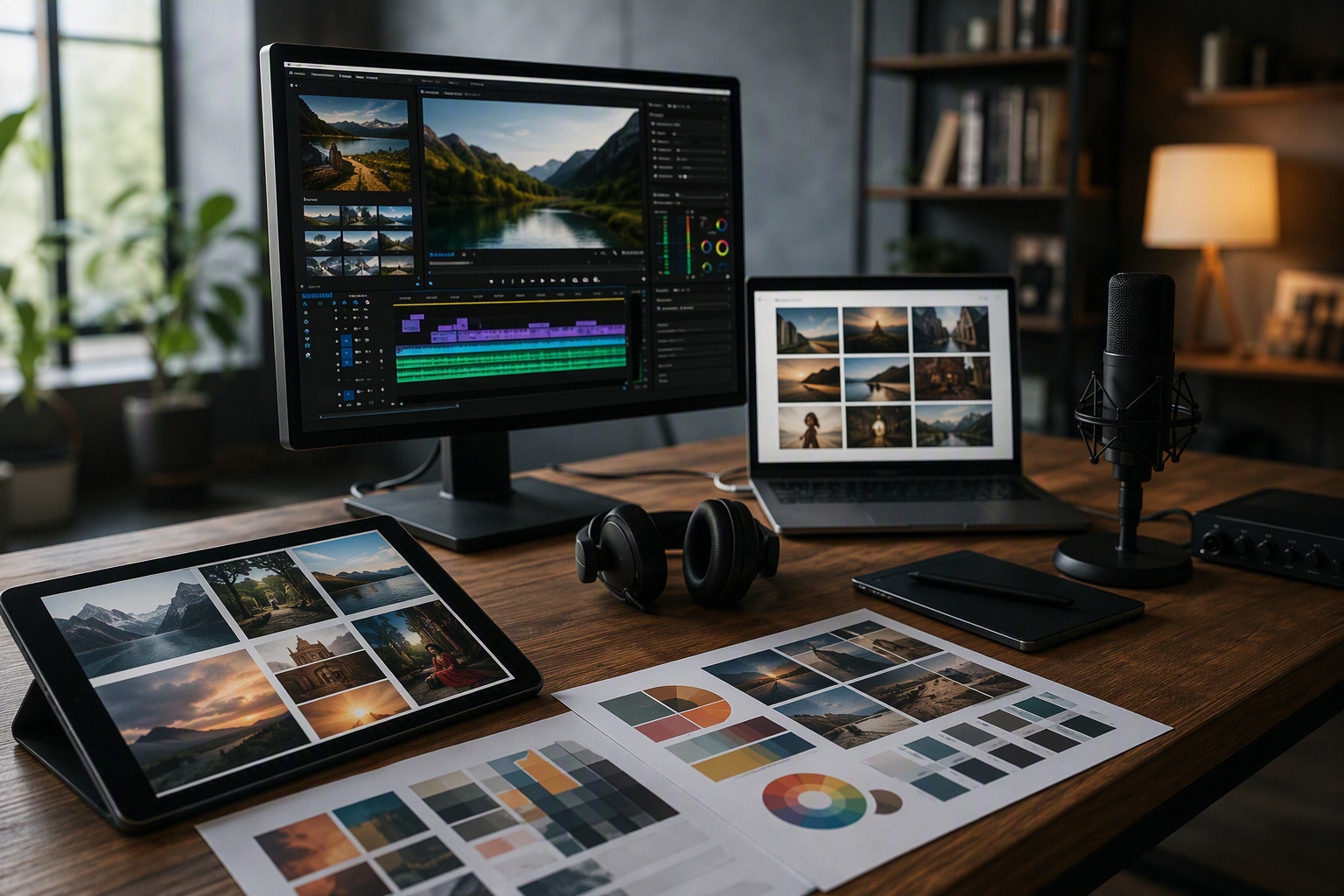
The same degree family can lead to different skill sets. According to Northeastern, its digital communication and media curriculum covers social media, search engine optimization, web development, and video storytelling. That mix fits a student who wants to create content and understand how people find it online. It also gives you a broader digital foundation, but breadth can mean less time spent building advanced production skills.
A more production-led plan goes deeper into making media. Arkansas State University reports that its creative media emphasis covers scriptwriting, video editing, audio production, design aesthetics, social-platform content, and a professional field work. It asks students to work across several formats and then apply those skills in a professional setting. That makes the curriculum a closer match for someone who wants to produce media, although it may offer less emphasis on search, web development, or the mechanics of online discovery.
| Target Skill | Courses or Requirements to Seek | Partner Program Example |
|---|---|---|
| Campaign writing and message planning | Copywriting, audience research, strategic communication, media analysis | American Public University System — Bachelor of Arts in Communication / Strategic Communication |
| Visual and web production | Graphic design, web design, interactive media, portfolio work | Grand Canyon University — Bachelor of Arts in Digital Design / Web Design |
| Broadcast and digital storytelling | Scriptwriting, audio, video editing, new media production | Grand Canyon University — Bachelor of Arts in Communications / Broadcasting & New Media |
| Marketing communication and design | Brand writing, campaign strategy, graphic design, digital content | University of West Alabama — Bachelor of Arts / Bachelor of Science in Integrated Marketing Communications / Graphic Design |
The key factor is whether the required courses support the work you actually want to show employers. A student aiming at content strategy may need the Northeastern-style mix of creation, distribution, and discoverability, while a student pursuing video or audio production may get more value from the production-led sequence. Neither course plan is automatically stronger; the better fit depends on which skills you need to practice repeatedly and demonstrate in finished work.
Count the required classes tied to your goal, then check how they build on one another. If video matters, one survey course is weaker preparation than a sequence covering story, capture, editing, and a finished project. Look for whether the curriculum moves from basic concepts into applied work, because a list of media topics does not show how much practice each skill receives. You can also compare the skill mix with digital media communications career roles without turning job titles into a substitute for curriculum review.
GetEducated's Picks
- Alvernia University Bachelor of Arts in Digital Media Marketing
- Rochester Christian University Bachelor of Science in Communication & Media
- Campbellsville University Bachelor of Science in Sport Management / Sport Media
How Portfolio and Capstone Work Prove Your Skills
A portfolio is the bridge between coursework and evidence of skill, so it should show completed work rather than only class notes or discussion posts. According to Abilene Christian University, its final digital media course requires students to present and defend a digital portfolio. That defense tests more than the finished files: students must explain their choices, process, and results. For a prospective student, the useful distinction is whether the program evaluates only what you made or also how you made decisions, responded to criticism, and solved a communication problem.
Senior portfolios vary in both structure and purpose. Champlain College emphasizes building an integrated portfolio through digital media and content creation coursework, while Grand Canyon‘s portfolio is intended to showcase design skills, critical analysis, and effective communication tools. Preparation begins during your sophomore year of college. Both models connect final projects with earlier coursework, but they may give you different kinds of evidence to show an employer. Check how often students revise work, whether feedback is detailed, and whether the final portfolio reflects one connected body of work or a collection of unrelated assignments.
The final requirement should also make clear what you will actually produce and what happens to it after grading. Before applying, check whether it includes:
- Several media formats rather than one written paper;
- A clear brief, audience, and goal for each project;
- Revision after instructor or peer feedback;
- A public or private portfolio you can keep after graduation;
- A presentation, defense, client project, thesis, or field work.
Ownership can affect the portfolio’s value as much as the project itself. Ask who owns the finished work and whether you may show client projects after the course ends. A polished capstone is less useful if a contract bars you from displaying it, and a private portfolio may limit what you can show during a job search. For a separate look at how the degree may connect to work, see digital media communications career paths.
Which Digital Media Specialization Fits Your Goal?
Specializations determine which kind of work receives the most practice. A digital design track may center on layout, visual systems, and web work, while a marketing track may give more attention to campaigns, copy, audience research, and brand messages. Campbellsville University’s Bachelor of Science in Digital Design Technology is one example of a design-led title. Alvernia University’s Bachelor of Arts in Digital Media Marketing points toward the marketing side. Those labels are useful starting points, but the required courses tell you more than the title does.
Read the required courses as a description of the work you will actually be asked to complete. Tulane’s major includes 36 credits and highlights digital design, copywriting, media research, content creation, search engine optimization, search engine marketing, and a capstone. That combination connects creative production with campaign planning. It may suit a student who wants both sides of that work, but someone seeking advanced animation or film production should check whether the electives provide enough depth. A course list can look broad while still leaving little room for the narrow skill set you want to build.
- Strategic communication: best aligned with research, campaigns, public messages, and writing. This path makes sense if you want to explain ideas clearly and support communication decisions with audience information.
- Digital marketing: look for content strategy, search, social media, analytics, and copywriting. The mix matters: a program heavy on messaging but light on analytics will prepare you differently from one that gives both areas sustained attention.
- Visual or web design: seek design foundations, typography, user experience, web tools, and portfolio courses. Portfolio work is especially relevant if you need finished pieces that demonstrate how you make and revise design decisions.
- Broadcast or creative media: prioritize scriptwriting, sound, camera work, editing, and production practice. These courses require a different kind of preparation from a primarily writing or marketing curriculum, so a broad media label is not enough evidence by itself.
Do not assume a concentration guarantees depth. Compare the number and sequence of required courses, then check prerequisite chains. A specialization with several connected courses may give you more sustained practice than one that names the same area in a single survey course. If a desired advanced course is only an elective, confirm that the school offers it often enough for you to take it and that its prerequisites will fit your schedule. The curriculum should support the work you want to show, not just the title you want printed on your degree.
Find Your Online Art & Liberal Arts Degree
Narrow 59 accredited online Art & Liberal Arts degree programs to find the perfect fit.



Arkansas State University
Bachelor of Science in Digital Technology & Design / Animation & Motion Graphics



Arkansas State University
Bachelor of Science in Digital Technology & Design / Graphic Communication

The University of Alabama
Bachelor of Arts in Communication & Information Sciences / Public Relations & Digital Communication
University of Mount Saint Vincent
Bachelor of Interdisciplinary Professional Studies - Communication & Media Studies
Mount Aloysius College
Bachelor of Science in Business Administration / Marketing Communications Media
Frequently Asked Questions
What classes do digital media communications majors take?
Common subjects include writing, media analysis, audience research, visual design, social media, web content, audio, video, and campaign planning. The exact balance changes by school and specialization, so the program title tells you less than the required course list. A broad curriculum can be useful, but it may leave less room for sustained practice in the skill you actually want to use.
Does the degree teach video editing?
Some programs require video production or editing, while others offer only an introduction or an elective. Check for a sequence that moves from storytelling and capture through editing and a finished project. One introductory course may expose you to the tools without giving you enough practice to produce a substantial work sample.
Will I learn graphic design in this major?
A design-led program may teach layout, visual systems, web design, and design software. A communication-led program may include only a basic design course, so inspect the required core. The distinction matters if visual work is central to your goal: an elective can broaden your options, but it does not replace a sustained design sequence.
Do digital media programs teach social media strategy?
Many do, but course depth differs. Look for audience research, content planning, platform writing, campaign measurement, and ethics rather than a course that only reviews current platforms. Measurement is especially useful because it connects the content you create with the results you are expected to evaluate. A platform overview can become dated quickly; these underlying skills travel better across platforms.
Is coding part of a digital media communications degree?
It may be. Programs with web development or interactive media often include some coding, while strategic communication tracks may not. Read course descriptions for HTML, web development, or interactive design, and confirm whether those courses are required or merely available as electives. The degree title alone will not tell you how much technical practice you will receive.
Do I need a portfolio to graduate?
Not always. Some programs require a portfolio, thesis, field work, or capstone; others use a final course or project. Favor a format that produces work relevant to your target skill. If a portfolio is the goal, check whether the required work creates finished pieces you can actually use, rather than leaving you with only a course grade or a written reflection.
What makes a strong digital media capstone?
A strong capstone starts with a clear audience and goal, documents the process, uses feedback, and ends with a polished product. A presentation or defense can also show that you understand your decisions. That combination gives you both an artifact and an explanation of how you made it, which is more useful than a final product with no visible process.
Should I choose digital marketing or media production?
Choose digital marketing if you want more writing, campaign, search, social, and measurement work. Choose media production if you want deeper practice in video, audio, graphics, or interactive content. There can be overlap, but the required sequence should reveal the emphasis: compare the major courses and the final project before relying on the specialization label.
How can I compare two digital media curricula?
List every required major course by skill area, then mark the portfolio and capstone requirements. Compare sequences, not just titles. A program with several linked production courses usually offers more depth than one survey course. Also note where the sequence builds from introductory work to a finished project; that progression shows whether the curriculum is designed for practice or simple exposure.