

Key Takeaways:
- Becoming a substance abuse counselor online is achievable for busy adults. The path involves accredited education and supervised experience leading to state licensure.
- State requirements for education level and supervised hours vary widely. Confirm your state’s standards before enrolling to ensure your chosen program aligns with your career goals and timeline.
- Breaking your journey into manageable planning periods and using unbiased resources like GetEducated can help you compare accredited programs and stay on track toward your new career while keeping costs in check.
Substance abuse counseling is one of the fastest-growing fields in social services, and the demand for qualified professionals continues to rise. You can start this career online without pausing your current life, and the path is more straightforward than you might expect.
GetEducated helps you navigate online substance abuse counseling programs with transparent, unbiased guidance on timelines and costs. This guide covers everything from associate degrees to master’s programs and state requirements.
Ready to compare your options? Use the online counseling degree directory to find accredited programs that match your schedule and budget.
Step-by-Step: How to Become a Substance Abuse Counselor Online
The online steps to become a substance abuse counselor follow a predictable sequence that works around your current responsibilities. You can complete most qualifications while working full-time and caring for your family. The key is understanding what each step requires and planning ahead for state-specific rules that vary widely across the country.
GetEducated's Picks
- Alvernia University Bachelor of Arts in Addictions & Mental Health Treatment
- Grand Canyon University Bachelor of Science in Counseling / Addiction, Chemical Dependency & Substance Abuse
- Campbellsville University Certificate in Addiction Recovery
Follow the Five-Step Sequence
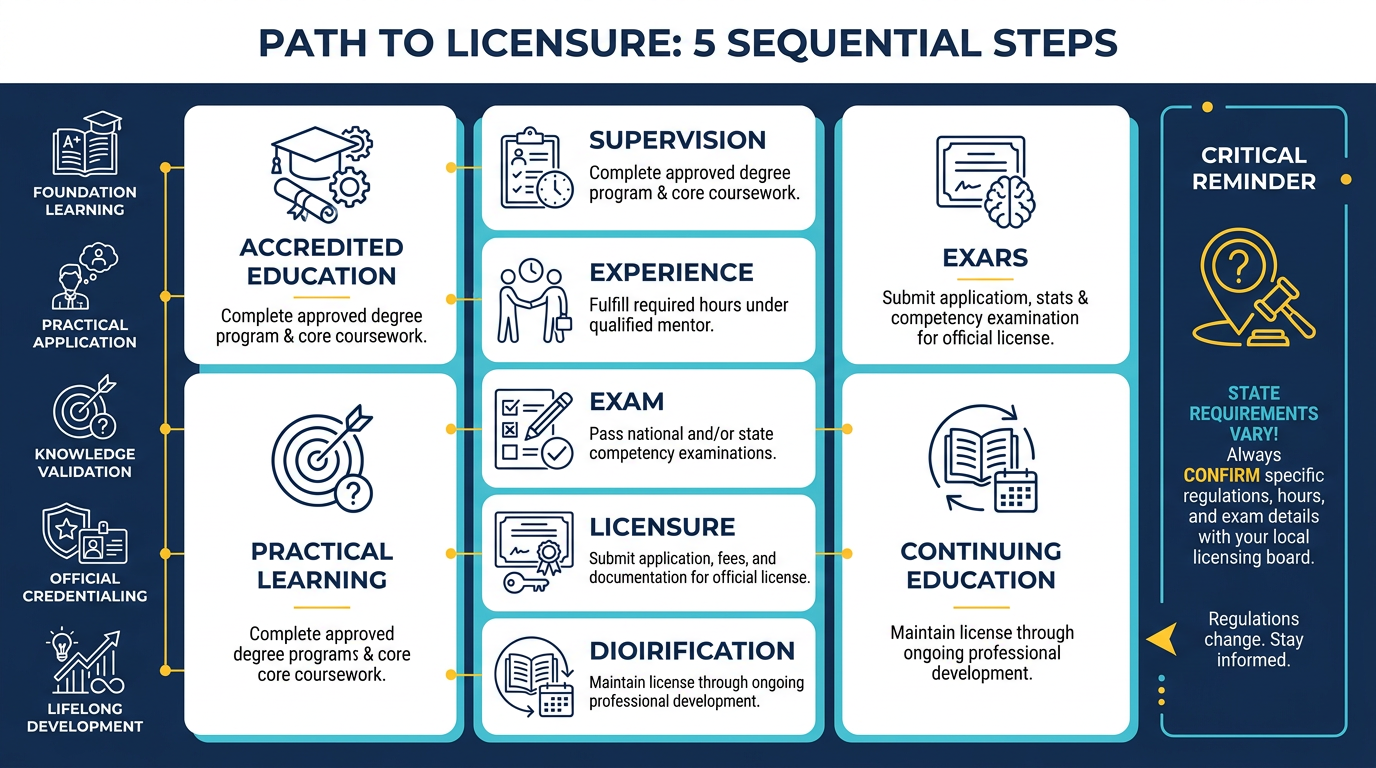
Start by choosing an accredited substance abuse counseling program that meets your state’s education criteria. Complete your coursework online, which typically covers addiction theory and counseling ethics. Next, secure clinical training through internships or practicum placements. Pass your state’s required exam, which may include national certifications like the NCE or state-specific tests. Finally, apply for your license or certification through your state board. Each step builds on the previous one, so completing them in order prevents delays and ensures you meet all national competency standards. Understanding this progression helps you set realistic expectations for your career transition timeline.
Confirm State Standards Early
Contact your state licensing board before enrolling in any program to verify exact qualifications. Some states accept associate degrees for entry-level positions, while others require master’s degrees for full licensure. Practicum hours range from a few hundred to several thousand, depending on your location. For example, Texas requires 4,000 supervised hours for LCDC licensure, while California mandates 4,000 hours for LAADC certification. Knowing these specifics upfront helps you choose the right degree level and plan your timeline accurately. This research phase connects directly to creating a structured study plan that fits your busy schedule.
Use 11-Week Planning Periods
Break your journey into 11-week periods to maintain momentum while juggling work and family commitments. This timeframe works well for adult learners because it aligns with typical academic quarters and provides enough time to establish new routines without feeling overwhelmed. Use the first period to research programs and complete applications. Dedicate the second period to starting coursework and establishing study habits. Reserve the third period for securing practicum sites and beginning clinical training. This structured approach helps prevent feeling overwhelmed and creates regular check-in points to assess your progress. Set specific goals for each period, like completing a certain number of credit hours or logging practicum work, to stay accountable to your affordable online counseling degrees ranking.
 Education and Accreditation: What Degree Do You Need?
Your state determines which degree level qualifies you for substance abuse counseling roles. bachelor’s degree completion programs in substance abuse counseling can qualify you for entry-level positions in some states, while bachelor’s programs provide broader opportunities. However, many states require a master’s degree in counseling, social work, or psychology with addiction-focused coursework for full licensure. States like Washington allow associate-level entry with specific supervised hours. Other states mandate graduate education for independent billing privileges.
Select regionally accredited programs that align with addiction counseling competencies and verify alignment with your state board before enrolling. Look for coursework in addiction counseling, ethics, and treatment planning. Public universities often offer lower tuition rates than private institutions. Compare program costs using top-ranked online master’s counseling programs to find options that fit your budget.
Licensure, Certification, and Timeline: From Coursework to Credential
Understanding how long it takes to become a certified substance abuse counselor helps you plan your career transition realistically, especially since state requirements for clinical supervision vary significantly from hundreds to thousands of hours. The timeline depends on your chosen degree level, state requirements, and how quickly you complete hands-on training.
Your path to independent practice involves meeting specific milestones that differ by location and credential type. Planning ahead prevents delays and helps you budget time for both coursework and supervised practice.
- Entry-level certification typically takes 1 to 3 years, combining coursework with supervised practice hours.
- Master’s-level licensure ranges from 2 to 6 years, depending on degree completion and state-specific clinical supervision requirements.
- Supervised hours vary significantly by state, with Virginia requiring 240 hours for CSAC-A certification while Massachusetts mandates 2,000-6,000 hours for full licensure.
- Common credentials include CADC (Certified Alcohol and Drug Counselor) and LADC (Licensed Alcohol and Drug Counselor).
- States like Washington require 1,500-2,500 supervised hours based on education level, demonstrating how your degree choice directly impacts your timeline to practice.
Check your state’s specific requirements early in your planning process, as this prevents surprises and helps you choose a graduate certificate in substance abuse counseling that aligns with your state’s pathway to licensure. Review GetEducated’s best online schools for substance abuse counseling for additional program evaluations.
FAQs: Online Pathways, Experience, and Finding Quality Programs
Adult learners juggling work and family often wonder about the practical realities of pursuing substance abuse counseling online, whether you’re starting fresh or building on previous college experience. These answers address common concerns about education qualifications, program quality, and practical steps for gaining hands-on training.
Can you become a substance abuse counselor without a degree or experience?
Most states need at least an associate degree, though rules vary significantly. Some states accept national certifications like NCAC II in place of formal education. Entry-level positions may be available with minimal experience, but state licensure usually demands supervised experience and classroom training.
What are the best online programs for aspiring substance abuse counselors?
Look for regionally accredited programs that align with your state’s specific coursework standards. GetEducated’s online doctorate in substance abuse counseling programs database helps you compare accredited options by cost and quality. Our affordable online bachelor’s in counseling ranking provides additional program evaluations. Verify that programs include required topics like pharmacology, ethics, and group counseling methods before enrolling.
How do online students gain supervised experience locally while completing coursework?
Most online programs help students find local supervision placements through partnerships with treatment centers or private practices. States like Washington state require face-to-face supervision and direct client contact hours. Your program’s internship coordinator usually helps connect you with approved local supervisors who can document your practical experience.
Do online substance abuse counseling programs meet state licensing qualifications?
Accredited online programs generally meet educational standards, but you must verify that specific course content matches your state’s rules. Each state has different expectations for hands-on training, exam types, and continuing education. Check with your state licensing board before enrolling to confirm your chosen program’s coursework meets your state’s certification needs.
How long does it take to complete an online substance abuse counseling program?
Associate degree programs often take 18-24 months, while bachelor’s degrees need three to four years for part-time students. Master’s programs range from two to three years, depending on your schedule and practical experience qualifications. Browse GetEducated’s online substance abuse counseling certificate programs for shorter credential pathways that can accelerate your timeline.
Compare Accredited Online Degrees and Plan Your Next Step
Becoming a substance abuse counselor online requires choosing accredited programs that align with your state’s licensure requirements. Start by confirming program accreditation standards and breaking your journey into manageable milestones that fit your work and family schedule.
Once you’ve verified accreditation requirements, budget planning makes your goal achievable. When you’re ready to pursue accredited online master’s counseling programs, focus specifically on substance abuse counseling programs that match your career goals and your state’s licensure path. GetEducated reviews thousands of accredited programs to help you find the right fit for your budget and timeline.