

Key Takeaways:
- You can often start in loss prevention with retail experience and employer training alone, because stores value sharp floor awareness and sound judgment at the entry level.
- The job depends less on looking intimidating or acting like a traditional security guard, and more on noticing patterns and documenting incidents clearly.
- Experience helps you get hired, but an affordable, accredited online degree or short credential is what usually broadens your options for investigations and supervisory roles in retail security.
Loss prevention might seem like a field that requires a law enforcement background or a criminal justice degree before anyone will consider you. In reality, many retail loss prevention specialists enter the field through on-the-job training, often stepping straight off the sales floor. If you are exploring how to become a loss prevention specialist, your retail experience may already be the credential employers are looking for, and pairing it with an online criminal justice degree can open the door to investigations and supervisory roles down the line. GetEducated offers free, independent tools to help adult learners compare affordable, accredited online programs so you can map a realistic next step.
Retail Experience Can Be Enough To Get Started
If you’re wondering whether you can become a loss prevention specialist with retail experience only, the short answer is yes, at the entry level. Retail work builds exactly the kind of awareness employers look for, since you already know how a store operates and how customer behavior can signal risk. The catch is that employer training has a ceiling: it covers store policy and surveillance tools, but it does not travel with you across employers or into investigations and supervisory roles. Pairing that retail experience with an accredited online degree in criminal justice or security management is what turns an entry-level position into a genuine career path.
GetEducated's Picks
- Fisher College Associate of Science in Criminal Justice
- East Mississippi Community College Associate of Arts (AA) - Criminal Justice Emphasis
- Michigan State University Master of Arts in Criminal Justice
Your Retail Background Already Signals Readiness
Knowing how a store operates is genuinely useful in loss prevention. You already understand product flow and how customers move through high-theft areas, which sharpens the observation habits the job requires. Retail and security experience often qualify candidates for entry-level loss prevention roles for exactly this reason.
Employers Fill In The Gaps Through Training
Most employers don’t expect new loss prevention hires to arrive fully trained. Companies commonly provide structured onboarding once you’re hired. That means a background in retail customer service can be enough to clear the hiring bar, as long as you demonstrate solid judgment and attention to detail.
Where Experience Alone Starts To Run Short
Entry-level doors open with retail experience. A supervisory or investigative role asks something different: employers want credentials that reflect knowledge of security law and policy beyond what any single store’s training program covers. A bachelor’s degree in criminal justice or a related security program also does something employer training cannot: the credential belongs to you, regardless of which company you work for next.
The Skills Employers Expect In Loss Prevention
Loss prevention employers screen for awareness and sound judgment, not physical imposingness. Many of these qualities develop through time on a retail floor, which means you may be further along than you expect.- Notice patterns, not just incidents: Spotting unusual behavior before something happens is more valuable than reacting after the fact.
- Document clearly and accurately: Incident reports need to hold up to scrutiny, so precise, factual writing matters more than strong opinions.
- Stay calm under pressure: Specialists regularly work through tense moments with customers and coworkers alike, and self-control is a skill employers actively look for at every level.
- Apply policy consistently: Knowing the rules and following them without shortcuts protects the store and protects you.
- Exercise discretion: Poor judgment in a sensitive situation can create more liability than the original incident, so employers need people who think before they act.
These skills apply across the full range of loss prevention work, from entry-level spotting to investigations and management. The next question is which training and education paths can sharpen them and signal to employers that you’re ready to move beyond entry level.
Certifications And Degrees Help You Move Up
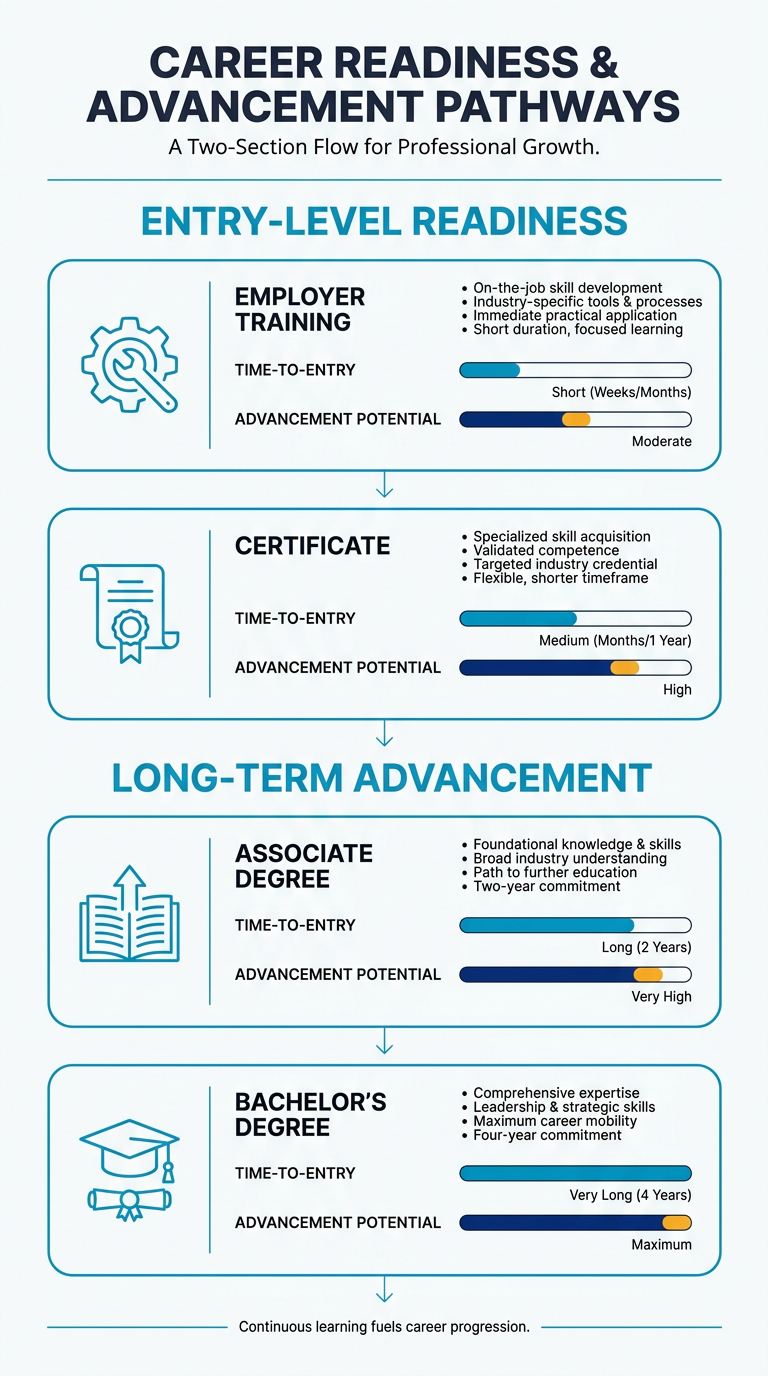
Not every path into loss prevention looks the same, and the right one depends on where you are now and where you want to go. According to O*NET’s occupation profile for retail loss prevention specialists, most entry-level roles require only a high school diploma and on-the-job training, but the knowledge areas tied to advancement, including investigations and security management, align closely with formal education.
If you’re ready to compare programs, this ranking of online criminal justice associate degrees is a good place to start.
| Path | Best For | Typical Employer Value | Advancement Potential |
|---|---|---|---|
| Employer Training | People entering loss prevention directly from retail | High for entry-level hiring: covers store policy and surveillance reporting procedures | Supports floor-level roles; limited for moving into investigations or supervision |
| Short Certificate | Those wanting recognized credentials without a full degree | Moderate to high; the Loss Prevention Foundation’s LPQ is recognized by major retailers for professionals with under three years of experience | Signals commitment to the field; strengthens applications for specialist and team lead roles |
| Associate Degree | Career changers building a foundation in criminal justice or security | Solid for mid-level roles: shows academic grounding in security law and ethics | Opens doors to supervisory positions; pairs well with employer experience for faster advancement |
| Bachelor’s Degree | Those targeting investigations, corporate security, or management | Strong across retail and corporate environments; the ASIS Certified Protection Professional (CPP) credential, which often requires a degree, is widely respected at the management level | Highest advancement potential, opening doors to investigations and corporate security leadership |
Employer training is a legitimate starting point, and for many people in retail it’s the fastest way to get a foot in the door. But if you’re thinking beyond a single store or a single title, pairing that experience with an accredited online degree in criminal justice or a related security field gives you credentials that travel with you, regardless of which employer you work for next. GetEducated also maintains a directory of accredited online certificate programs if you want a shorter-term credential to complement your work history while you weigh a full degree.
FAQ: Common Questions About Becoming A Loss Prevention Specialist
If you’re weighing a move into loss prevention, a few practical questions tend to come up before people feel ready to act. The answers below address what employers actually require at different career stages, so you can figure out where you stand right now.
Can you get into loss prevention if you already work in retail but don’t have a degree?
Yes. Many employers accept a high school diploma or GED for entry-level roles, especially when you bring solid retail floor experience. Your familiarity with store operations and daily customer interactions already covers ground that a new hire without retail exposure would need time to learn.
What training or certification do loss prevention specialists need before applying?
Most employers handle initial training in-house, covering incident reporting protocols and the surveillance tools you’ll use on the job. Depending on your state, a security license may be required. In Florida, for example, a Class D security license requires roughly 40 hours of coursework. The security officer career guide on GetEducated covers licensing requirements and what to expect from that process.
Does loss prevention experience count toward a criminal justice degree later?
Many accredited online programs welcome working adults and allow prior learning credits toward a criminal justice degree, which means your professional experience may reduce the time and cost of earning one. It’s worth asking each school directly about their credit transfer and prior learning policies before you enroll.
What degree actually helps you move up in loss prevention or retail security?
An associate or bachelor’s degree in criminal justice or security management can strengthen your case for supervisory and investigative roles. Online bachelor’s degree programs in criminal justice administration list loss prevention among their career outcomes and can be completed on a schedule that works around full-time employment.
Start With Experience, Then Choose Education That Expands Your Options
Retail experience is a real on-ramp into loss prevention, not a consolation path. The more useful question is where you want to go once you are in.
Employer training equips you for one store’s procedures. A criminal justice or security management degree equips you for a career. The credential you earn is yours: it travels with you across employers, not just through a single store’s career ladder. CareerOneStop confirms that higher education connects to better pay and broader advancement in this field, and accredited online programs make that investment practical for adult learners who work full-time.
Use GetEducated’s free, independent tools to compare accredited online programs for loss prevention and retail security careers, and take the next step toward becoming a loss prevention specialist with confidence.