

Key Takeaways:
- There are numerous scholarships and grants specifically designed for adults over 30, including options for single parents and career changers as well as part-time students.
- Federal student aid and many private scholarships have no age limit, allowing adult learners to combine multiple funding sources to minimize out-of-pocket costs.
- Careful planning and early application, along with leveraging resources like GetEducated’s comparison tools, can help adult students find accredited programs and scholarships that fit their schedules and career goals without breaking the budget.
Nearly 40% of college students today are over 25, yet many believe scholarships disappear after traditional college age. That’s not accurate. Hundreds of scholarships designed for adults over 30 exist specifically because organizations recognize the value of supporting career changers and degree completers.
Federal student aid has no age limit, and many private scholarships actively seek applicants with work experience and life skills. Whether you’re a single parent transitioning careers or a working professional adding credentials, the right combination of scholarships and grants can cover substantial tuition costs. Start comparing accredited programs that match your schedule and budget with GetEducated’s free search tool.What Counts as Financial Aid for Students Over 30?
Understanding your options helps you build a smart funding plan that reduces debt. Financial aid for students over 30 includes several types of support that work differently.
GetEducated's Picks
- Grand Canyon University Bachelor of Science in Educational Studies
- Arizona State University Bachelor of Arts in Education - Educational Studies
- University of Arizona Global Campus Bachelor of Arts in Education Studies
- Scholarships and grants are free money that never requires repayment, based on merit or need.
- Employer tuition assistance covers part of accredited degrees annually; check caps and eligible programs.
- Veterans’ education benefits are narrowed to service members, but many do not expire after you leave active duty. Programs like the GI Bill and vocational rehabilitation can cover significant tuition costs for qualifying adults.
- Federal loans should be your last option after exhausting free money sources.
- Stacking aid means combining scholarships, grants, and employer benefits before considering loans.
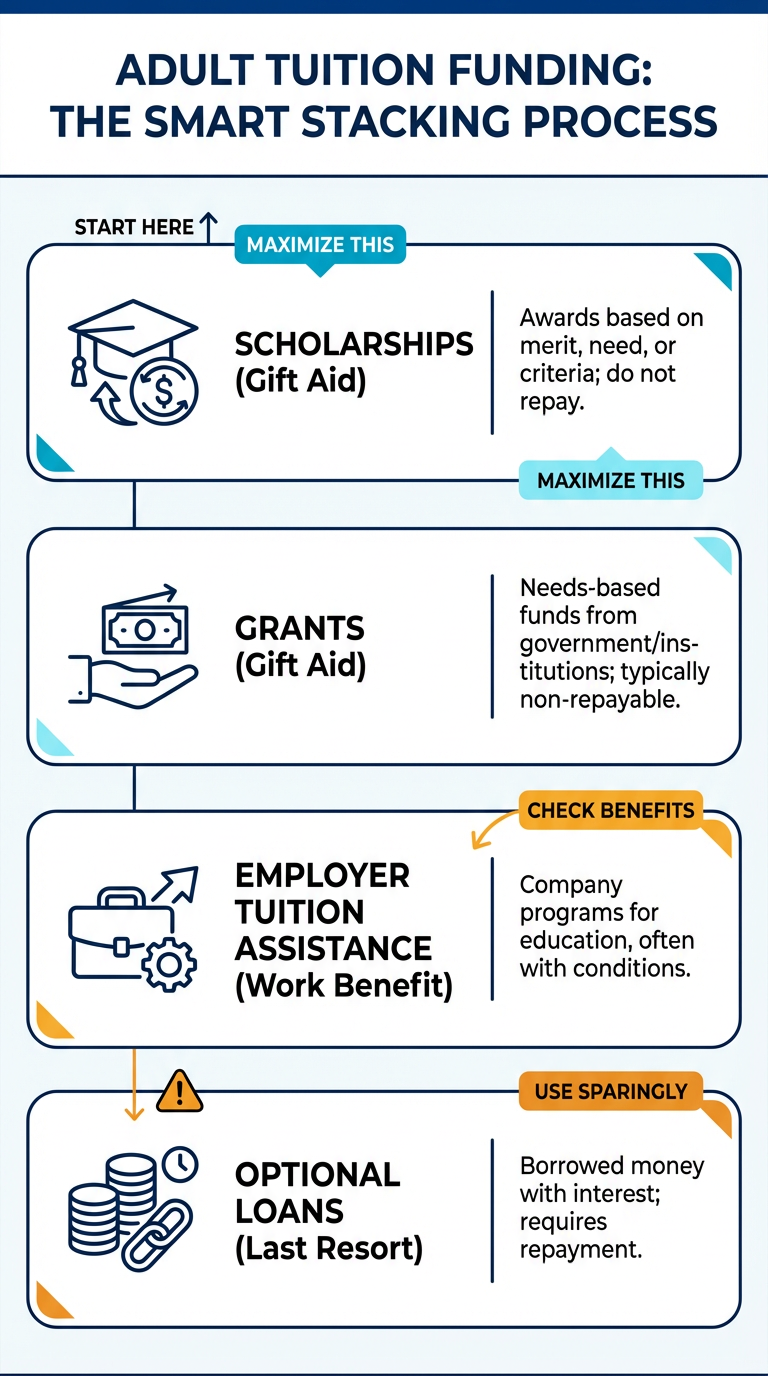
The federal government defines these aid types clearly, and GetEducated’s financial aid guide breaks down how they apply to adult learners, including application strategies for each funding source. Start with free money, then fill the remaining gaps strategically.
-
Education For Less (EDU4Less): Tuition Scholarships for Working Adults
Education For Less, Inc. is a 501(c)(3) nonprofit built specifically for the adult learners this article is about: working professionals, parents, veterans, and career changers pursuing online degrees. While most scholarship programs require lengthy applications and essays, EDU4Less takes a different approach by negotiating built-in savings at accredited schools in its network.Here’s what you get when you enroll through EDU4Less:
- 10 to 20% off tuition at in-network accredited schools, applied automatically through their enrollment platform.
- Application fees covered so you can compare multiple programs without racking up costs.
- Free transcript ordering to remove another common barrier for returning students.
- 100% online programs designed for students balancing full-time jobs and family schedules.
By charter, at least 85% of EDU4Less funds go directly to educational scholarships, so donor dollars are working efficiently. If you’re exploring scholarships for adults over 30 and want a low-barrier way to start saving on tuition immediately, EDU4Less should be your first stop.
-
Jeannette Rankin Foundation Scholarships for Women Over 30
The Jeannette Rankin National Scholar Grant stands out among scholarships for women over 30 because it specifically targets women and nonbinary students aged 35 and older pursuing undergraduate degrees. This program offers up to $2,500 annually and can be renewed for up to five years, providing sustained support rather than a one-time award. The foundation requires demonstrated financial need and enrollment at an accredited institution, making it ideal for working mothers transitioning careers while managing tight budgets.
This scholarship differs from typical awards through its comprehensive support system that goes beyond money. Recipients gain access to academic guidance and peer networks designed to help adult learners persist through graduation. When applying, prepare a focused goals essay that connects your education directly to specific career outcomes. For someone transitioning into healthcare, clearly explain how your degree will lead to certifications or clinical roles that improve your family’s financial stability. The application process takes about 90 minutes and requires financial documentation, so gather tax returns and recommendation letters early. For more grant options that complement this scholarship, explore additional funding sources for nontraditional students.
-
Patsy Takemoto Mink Education Support Awards: Grants for Adults Returning to College
The Patsy Takemoto Mink Education Foundation specifically supports low-income women who are mothers with minor children pursuing vocational, associate, bachelor’s, or advanced degrees at accredited not-for-profit institutions. This award stands out among grants for adults returning to college because it recognizes the unique challenges working mothers face when balancing education with family responsibilities. The foundation awards five scholarships of up to $5,000 each, making this a meaningful but competitive funding source for women who are transitioning careers while supporting children.
The flexible nature of these funds distinguishes this funding from tuition-only scholarships. Recipients can use the money for school expenses and course materials, or put it toward childcare and living costs that often derail returning students. The 2025-26 application cycle has closed, with next cycle information expected in May 2026, so start gathering your income documentation and tax returns early to avoid last-minute stress. Check out grants for online college for additional funding sources that pair well with this award.
-
P.E.O. Program for Continuing Education: Grants for Women Returning to School
The P.E.O. Program for Continuing Education (PCE) has been helping women return to school since 1973. This need-based grant provides one-time financial assistance of up to $4,000 to women whose education was interrupted and who need to complete a degree or certification to improve their employment prospects.
- Applicants must have experienced at least 24 consecutive months as a non-student sometime during their adult life.
- Grants cover education-related expenses including tuition, books, testing fees, and childcare while attending class.
- Online programs at accredited institutions qualify, making PCE a strong fit for working adults pursuing distance education.
- A local P.E.O. chapter must sponsor your application, but membership in P.E.O. is not required to receive a grant.
- Applications are accepted on a rolling basis, with chapter recommendations submitted at least eight weeks before your term starts.
Because PCE grants are administered through local chapters, the application process includes a personal interview that lets you share your story directly with supporters. If you don’t know a P.E.O. member, you can fill out a sponsorship interest form on their website.
-
American Legion Auxiliary Non-Traditional Student Scholarship
The American Legion Auxiliary Non-Traditional Student Scholarship awards five $2,000 scholarships each year to adult learners who are returning to the classroom after a break in their education or beginning college later in life. This program is specifically designed for military-connected adults who are ready to pursue or resume their education.
- Open to current American Legion, ALA, or Sons of The American Legion members with at least two years of paid membership. Honorably discharged veterans and spouses of active-duty servicemembers or veterans also qualify.
- Part-time students are eligible, and funds can be used for training in certified trade or technical programs as well as two-year or four-year degree programs.
- Applications open each September and close on March 1. One scholarship is awarded per ALA geographic division.
- No FAFSA is required; applicants submit a personal statement or resume outlining work experience and transferable skills.
- Funds are paid directly to the school for the first semester upon enrollment certification.
This scholarship complements GI Bill benefits and employer tuition assistance for military-connected adult learners. Because it is awarded at the division level rather than nationally, competition is more targeted than many federal programs. For more ways to fund your education as a veteran or military spouse, check GetEducated’s GI Bill guide.
-
Return2College Scholarship: Career Change Scholarships You Can Apply For Fast
The Return2College Scholarship removes common barriers that stop working adults from applying for financial aid. This $1,000 program welcomes career changers of any age with a streamlined application process.
- Apply regardless of your age or how long you’ve been out of school.
- Complete a three-sentence essay instead of lengthy personal statements.
- Receive $1,000 toward tuition at any accredited institution.
- Submit applications for multiple terms with the same basic materials.
- Use your career transition story as the foundation for other scholarship essays.
The Return2College Scholarship shows that career change scholarships don’t have to involve complicated applications. The next deadline is April 30, 2026, giving you plenty of time to craft a focused response about your educational goals.
-
College JumpStart Scholarship: Scholarships for Part-Time Students
The College JumpStart Scholarship differs from other scholarships for adults because it welcomes part-time students and focuses on your commitment rather than your GPA. This $1,000 award accepts adult learners pursuing accredited degrees, including online programs that fit around work schedules. The selection process emphasizes your personal goals and perseverance, making it perfect for career changers who may not have perfect transcripts but have clear direction.
This flexible approach extends to the application timeline, with four opportunities yearly that give busy adults multiple chances to apply when their schedule allows. The 250-word personal statement should connect your studies to specific career outcomes, like earning nursing prerequisites or completing a healthcare administration degree. When applying for accelerated online programs that accept financial aid, emphasizing purpose over test scores often resonates with selection committees.
-
Online Degree Scholarships for Adults: Options at Accredited Universities
Many accredited online universities recognize that working adults face unique financial challenges and offer school-specific scholarships designed specifically for students over 30. For example, Southern Utah University provides an Adult Learner Grant covering up to 100% tuition for online students aged 26 and older, while other schools offer scholarships for part-time students or career changers. These online degree scholarships for adults often have more flexible eligibility requirements than traditional merit awards, focusing on life experience and career goals rather than just GPA.
Before applying to any program, verify the school holds regional or national accreditation through official databases like DAPIP or CHEA to avoid unaccredited programs. Use independent comparison tools to filter programs by adult-friendly features like flexible scheduling and prior learning credit. This research upfront saves time and helps you identify legitimate opportunities that align with your career transition goals.
-
Women’s Independence Scholarship Program (WISP) for Survivors
The Women’s Independence Scholarship Program provides adult student scholarships for survivors of intimate partner abuse who are pursuing accredited education to rebuild their lives. Since 1999, WISP has awarded $50 million to help more than 3,000 graduates achieve financial stability through education. The program supports survivors enrolled in vocational training, associate degrees, bachelor’s degrees, or graduate programs at accredited institutions. Awards can cover tuition and books as well as childcare and other education-related expenses that often create barriers for survivors returning to school.
WISP requires professional validation from an approved service provider, so begin coordinating with your domestic violence advocate or social worker at least 2-3 months before application deadlines. Your application should emphasize how your chosen program connects to career security and long-term safety planning. Include specific details about your academic goals and career timeline. Explain how the credential will help you achieve financial independence. For additional scholarship opportunities that complement WISP funding, explore GetEducated’s scholarship winners to see how other adult learners funded their education.
-
Crankstart Reentry Scholarship for Community College Returners
The Crankstart Foundation funds reentry scholarships for community college students who return to school after a break in their education. Adult students who have been out of college for two or more years may qualify, though specific requirements vary by participating campus. These awards are administered locally through partner colleges rather than directly by the foundation, which means each school sets its own application timeline and eligibility criteria. For example, UC Davis offers $5,000 Crankstart reentry awards for students ages 25 to 50 who demonstrate financial need.
Contact your campus financial aid office to learn whether your school participates in Crankstart funding and what their specific requirements include. Many colleges combine these reentry scholarships with other need-based grants and emergency funds to help cover books and transportation costs that often challenge returning students. This layered approach, combined with tuition discounts from online-friendly schools, can significantly reduce your out-of-pocket expenses while you complete your degree.
-
Imagine America ASEP: Adult Skills Education Program
The Adult Skills Education Program focuses on career training, making it well-suited for adults seeking scholarships for adult vocational learners who want to build skills quickly. Many adults over 30 use vocational training as a stepping stone to career change or degree completion.
- Adults 19 or older can apply for training at participating accredited career colleges and technical schools.
- Awards typically provide $1,000 applied directly to tuition and fees at participating schools.
- Verify your school participates in the program before enrolling to ensure eligibility.
- Career certificates often stack toward associate or bachelor’s degrees at many institutions.
- Applications run through the Imagine America Foundation portal with straightforward online workflows.
Vocational training can be a smart first step toward a full degree, especially in healthcare, where certifications open doors quickly. Many distance learning scholarships work alongside career training to help you build credentials affordably.
Scholarships for Adults Over 30: FAQs
Working adults juggling career and family responsibilities face unique scholarship questions that traditional student resources don’t address. These adult scholarship FAQs provide practical answers to help you navigate funding options that fit your real-world situation.
Can I get scholarships if I already have some college credits?
Yes, most scholarships for adults focus on degree completion rather than first-time enrollment. Many awards specifically target students who started college but never finished. Highlight your academic history and explain your gap in application essays to demonstrate maturity and commitment to finishing what you started.
Do I need to enroll full-time to qualify for adult scholarships?
No, many scholarships designed for working adults specifically welcome part-time students. Organizations like the Jeannette Rankin Foundation and College JumpStart accommodate part-time enrollment, and the P.E.O. Program for Continuing Education also supports part-time study at accredited institutions. However, federal student aid may have different requirements, so check each program’s specific enrollment minimums.
How do I find accredited online programs with scholarships for working adults?
Start with GetEducated’s online degree database to learn about financing options, then compare accredited programs that offer adult-friendly scholarships. Many universities provide institution-specific awards for online students. Verify accreditation before applying to any program.
Can scholarships cover childcare, transportation, or technology needs?
Some scholarships do cover these expenses. Patsy Takemoto Mink grants and P.E.O. PCE grants specifically allow funds for childcare and transportation. The Women’s Independence Scholarship Program (WISP) also covers these costs for survivors. Check each award’s guidelines to confirm eligible expenses.
What is a realistic timeline to apply and receive funds before the term starts?
Plan 3-6 months ahead for most scholarships. Complete your FAFSA application first, as it opens doors to federal and state grants. Most scholarship deadlines cluster in spring (March through May) for fall enrollment, so start your search in January. Allow extra time for gathering recommendation letters and financial documentation.
Finish Strong With Scholarships That Fit Your Life
The scholarships for adults over 30 covered here show you have concrete options to complete your degree, even with a busy schedule and financial constraints. From women-focused awards to military-connected support, these programs recognize the work experience that adult learners bring to their education, along with the life skills that strengthen their careers.
Now that you know what’s available, your next step is building a funding strategy that stacks scholarships with federal student aid and employer tuition assistance. Remember that adults have no age limit for federal aid, and many scholarships for adults over 30 are designed specifically for working students like you. A focused plan combining these resources can significantly reduce your out-of-pocket costs and keep debt manageable.
Ready to find accredited programs that fit your schedule and budget? Compare thousands of degree options and filter by your specific needs with GetEducated.