

Key Takeaways:
- Both ADN and BSN degrees can lead to RN licensure, but a BSN is increasingly preferred by employers and may offer greater long-term career flexibility.
- Accreditation is essential. Ensure any nursing program, especially online or hybrid formats, is properly accredited and meets your state’s licensure requirements before enrolling.
- Online RN programs require in-person clinical training, so choose one that fits your schedule and budget while offering strong clinical placement support.
Becoming a registered nurse is one of the more stable career paths for working adults. Nursing continues to offer strong job security and steady demand, making it an appealing path even for those starting later in life. The path involves an accredited degree and supervised clinical training before sitting for the NCLEX-RN, the national licensing exam for registered nurses.
Good planning starts with knowing your options. GetEducated’s online nursing degree programs directory covers program types and what to check before committing. Browse and compare accredited nursing programs to find options that fit your schedule and budget.
What Degree Do You Need to Become a Registered Nurse?
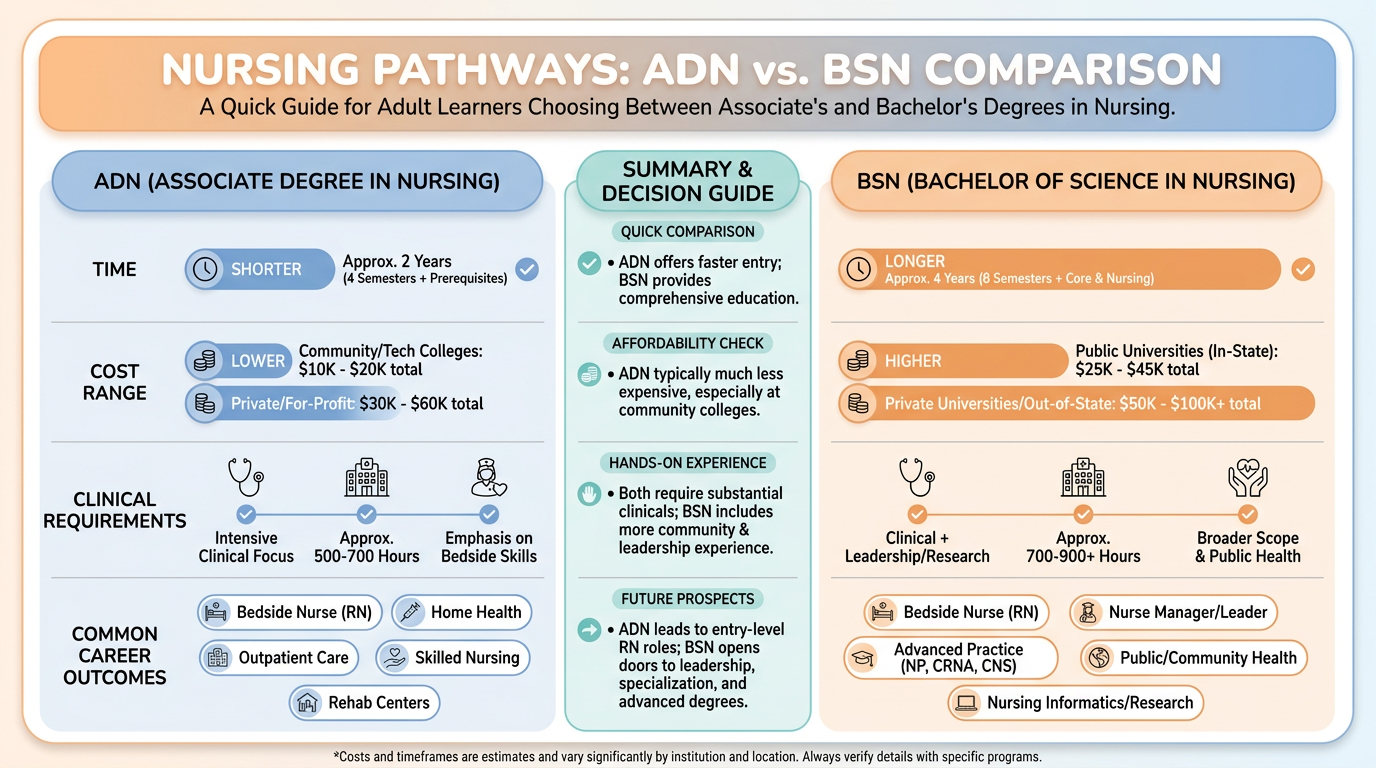
If you’re wondering what degree you need to become a registered nurse, the answer depends on your state and your long-term goals. Two routes lead to RN licensure: the Associate Degree in Nursing (ADN) and the Bachelor of Science in Nursing (BSN). Both can lead to the same RN license, but the right choice depends on your situation.
GetEducated's Picks
- East Mississippi Community College Associate of Arts (AA) - Pre-BSN Nursing Emphasis
- Walden University Doctor of Philosophy in Nursing - Interdisciplinary Health
- Grand Canyon University Master of Science in Nursing / Health Care Quality & Patient Safety (Bridge)
ADN vs. BSN: Two Routes to the Same License
The Bureau of Labor Statistics confirms that both an ADN and a BSN can lead to the National Council Licensure Examination (NCLEX-RN). That’s the licensing exam every registered nurse must pass. An ADN focuses on core nursing skills and can often be completed in about two years. A BSN takes closer to four years, with coursework that goes beyond clinical skills to include leadership and research foundations. GetEducated’s career resources cover the full scope of the role. Confirming your state board requirements early puts you in a stronger position before you enroll.
Choosing Based on More Than Speed
Speed is tempting, but it shouldn’t be your only filter. According to the AACN, 72.9% of registered nurses now hold a baccalaureate degree or higher, and many employers prefer BSN-prepared graduates. An ADN can cost less upfront, but many ADN graduates return for an RN-to-BSN program later, which adds both time and cost. If you have prior science or general education credits, those may count toward BSN prerequisites and shorten your timeline considerably. Clinical placement support and long-term career mobility matter too. Explore RN-to-BSN bridge programs to see how each program type compares.
What Accreditation Means for Your Future
For nursing students, accreditation affects far more than a school’s name recognition. It determines whether your degree can lead to licensure and financial aid eligibility. A program without proper approval can also block you from transferring credits or applying to graduate programs later. Look for programs accredited by the ACEN or CCNE for nursing-specific review, and confirm the school itself holds institutional accreditation. GetEducated’s college accreditation guide walks you through exactly what to verify. Once you understand the degree requirements, the next question is how online nursing programs actually work.
Can You Become a Registered Nurse With an Online Nursing Program?
Many adults searching for flexibility ask whether they can become a registered nurse with an online nursing program. The honest answer is that it depends on how the program is structured. Hands-on clinical training is a required part of RN preparation, and no amount of screen time replaces it.
That said, online formats can still work well for busy adults. Many accredited programs deliver lecture and theory content online, then schedule labs and clinical rotations at approved local healthcare facilities. If you are balancing work and family, here are the questions worth asking before you sign up:
- Online coursework covers core subjects such as pharmacology and pathophysiology alongside nursing theory, giving you flexibility to study on your own schedule, per AACN standards.
- Virtual simulation tools can support your learning, but 2023 research shows they supplement, not replace, the in-person hours required for licensure.
- Ask each program directly whether they assist with clinical placement or leave that responsibility to you, and compare your options using GetEducated’s ranked online nursing programs.
- An online program based in another state may not meet your state’s licensure requirements. Check state board guidance to verify authorization before you apply.
- NCLEX-RN pass rates are publicly reported and tell you how well a program prepares graduates for licensure. Look for programs with pass rates at or above the national average.
How Long Does It Take to Become a Registered Nurse as a Working Adult?
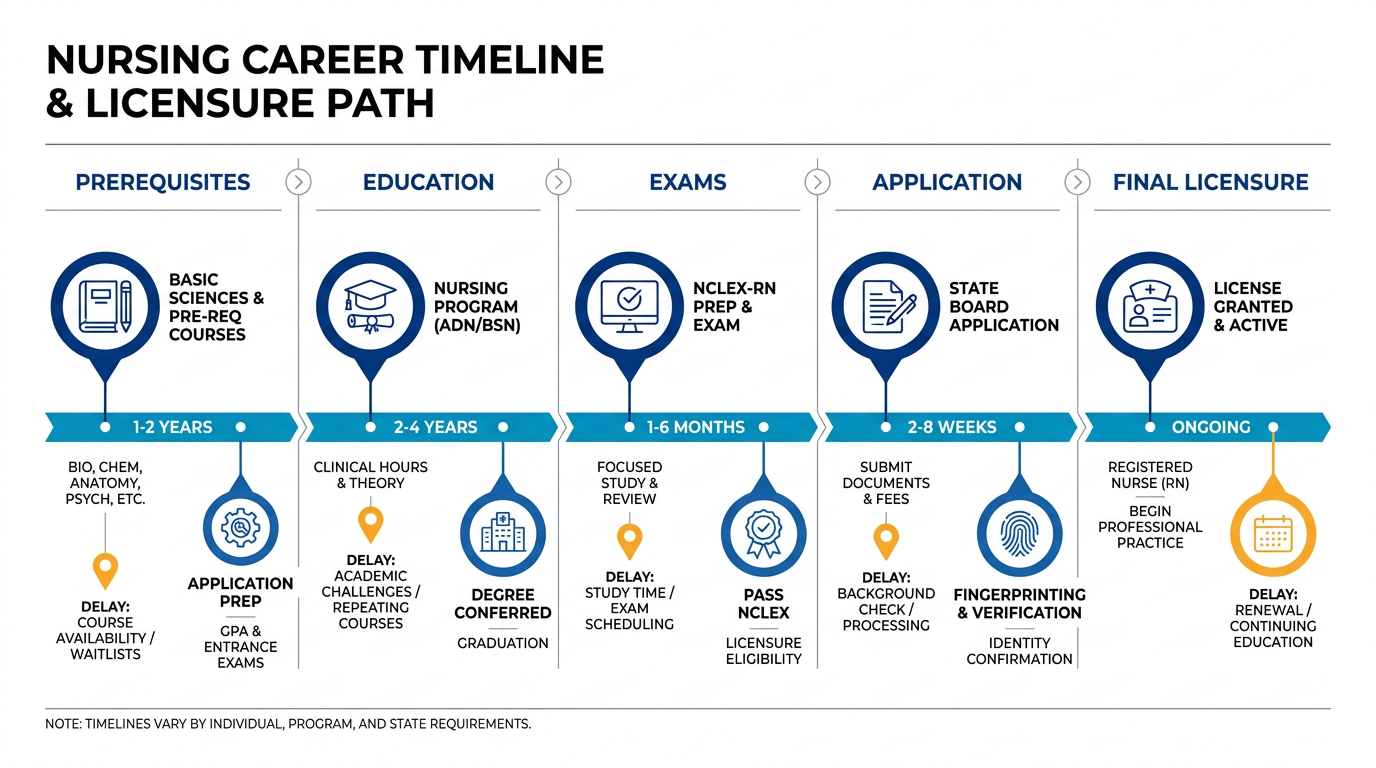
How long it takes to become a registered nurse as a working adult depends on where you’re starting from and the degree you choose, plus how many hours a week you can realistically commit. Most paths move through the same core stages, and knowing what each one demands helps you plan for your actual life, not a perfect one.
- Complete prerequisite courses first. Most nursing programs require science prerequisites like biology and anatomy before you can apply. Depending on how many you still need, this stage alone can take one to two semesters.
- Plan for a competitive admissions process. Nursing programs often have waitlists, so applying early and to multiple accredited schools can prevent a gap of several months before you start. Reviewing bachelor’s nursing programs can help you understand what schools generally expect from applicants.
- Expect two to four years for your core nursing program. An ADN takes about two years full-time, while a BSN runs closer to four. The American Nurses Association provides a full breakdown of these timelines. Part-time study stretches those ranges, but it also tends to improve completion rates for adults balancing jobs and caregiving.
- Schedule clinical hours to fit your life, not the other way around. Clinicals happen in person at approved healthcare sites and can run 12 to 16 hours per week during those semesters. Factor in commute time and childcare coverage before you commit to a start date. Comparing associate nursing programs side by side can show you how different programs structure their clinical requirements.
- Build a financial cushion before your program begins. Reduced work hours during clinical semesters can strain a household budget. Having savings set aside ahead of time gives you more flexibility when the schedule gets demanding.
- Register for the NCLEX-RN close to graduation. Your NCLEX-RN registration stays valid for 365 days. Once your Authorization to Test (ATT) is issued, the window to schedule and sit the exam is much shorter, often 60 to 90 days. Review the NCSBN guidance on NCLEX timing to avoid missing your window and paying fees again.
Registered Nurse Program Online FAQ
Choosing an online nursing program raises real, practical questions, especially when you are balancing work and family. Whether you are weighing degree options or wondering how clinical hours fit your schedule, getting clear answers before you enroll can save you real time and money.
Is an ADN enough to work as a registered nurse, or is a BSN the better long-term choice?
An ADN qualifies you to sit for the NCLEX-RN and work as a licensed registered nurse. Many hospitals prefer or require a BSN, and research links higher BSN staffing to better patient outcomes. For those who want room to grow, GetEducated’s ADN-to-BSN bridge programs walks you through ADN-to-BSN bridge pathways.
What should you look for in a registered nurse program online?
When evaluating a registered nurse program online, start with accreditation. CCNE covers baccalaureate and graduate programs, while ACEN covers associate and diploma programs, and both affect your eligibility for licensure and financial aid. From there, check NCLEX pass rates and clinical placement support, then use GetEducated’s listings to compare nursing programs side by side.
How do clinical placements work in an online RN program?
Most online nursing programs coordinate clinical placements with approved healthcare facilities near where you live. You complete hands-on hours in person, and the school arranges approved sites for you. State requirements vary, so check GetEducated’s nursing program guide for details on what to expect.
Can simulation hours count toward clinical requirements?
Some states allow simulation to substitute for a portion of the required clinical hours. The NCSBN’s landmark study found that up to 50% of clinical hours can be replaced with simulation when programs meet specific standards. Ask any school how simulation is used, and compare nursing programs on GetEducated to check how each handles it.
Choose a Registered Nurse Path That Fits Your Life
The right registered nurse program online isn’t always the fastest one. It’s the one that fits your state’s licensure rules and works within your budget and family schedule. Choosing based on fit rather than speed gives you a much better chance of finishing.
Before you commit, check a program’s NCLEX pass rates and confirm it holds ACEN or CCNE accreditation. Those numbers tell you more than any admissions page will. A program built around your schedule is one you’re far more likely to complete.
Exploring your nursing degree options before you apply can save you time and money. When you’re ready to compare, GetEducated makes it easy to search accredited nursing programs by cost and student outcomes, filtered by schedule flexibility.